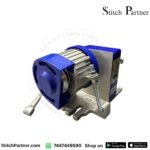
Industrial Sewing Machine Servo Motor
Short Description
Upgrade a compatible industrial sewing machine with this brushless servo motor kit featuring a digital controller box, speed adjustment, power switch assembly, pitman rod linkage, belt guard, and mounting hardware. Intended for selected lockstitch, overlock, coverstitch, zigzag, and other industrial sewing machine setups. Pack of 1 complete set. Confirm electrical ratings and mounting compatibility before ordering.
₹4,000.00 मूल कीमत थी: ₹4,000.00.₹3,499.00वर्तमान कीमत है: ₹3,499.00.
Industrial Sewing Machine Servo Motor with Digital Controller
An industrial sewing machine servo motor helps power your sewing machine while giving you greater control over stitching speed. Unlike a conventional clutch motor that continues rotating while switched on, a typical servo motor can reduce idle power consumption by operating in response to the foot pedal. As a result, it can help create a quieter and more comfortable sewing workspace.
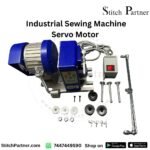
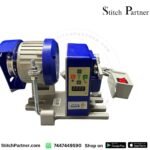
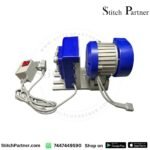
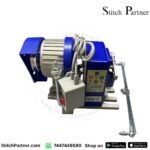
This servo motor kit is intended for compatible table-mounted industrial sewing machines. The supplied set includes a brushless motor, digital controller box, pitman rod linkage, power switch assembly, belt guard, and mounting hardware. Therefore, it offers several components needed when replacing or upgrading a compatible motor setup.
Key Features of the Sewing Machine Servo Motor
- Energy-saving operation: A servo motor can reduce electricity use compared with a conventional clutch motor, particularly when the machine spends time idle. Actual savings depend on the motor and working conditions.
- Digital speed adjustment: The controller allows the operator to adjust sewing speed within the motor’s supported range.
- Quieter operation: Brushless servo motors typically produce less idle noise than traditional clutch motors.
- Low-speed control: Suitable motor and controller combinations can help operators manage slower stitching for corners, curves, and careful seam work.
- Complete mounting set: The listed package includes mounting hardware and linkage components for installation on a compatible table setup.
Moreover, adjustable speed can help tailors work more comfortably when switching between long seams and detailed stitching. However, the motor’s actual torque, maximum speed, needle positioning features, and supported functions depend on the specific model and controller.
Compatible Industrial Sewing Machines
The supplied product information identifies these machine types as intended applications:
- Single-needle lockstitch machines
- Three-, four-, and five-thread overlock machines
- Interlock and coverstitch machines
- Heavy-duty walking-foot machines
- Zigzag sewing machines
- Feed-of-arm sewing machines
The listed brands include Jack, Juki, Singer, Brother, Siruba, Kansai, Pegasus, Typical, and Zoje.
However, these are intended applications rather than verified fitment for every model. Different machines may require different motor mounting arrangements, pulley sizes, belt lengths, controller connections, or torque characteristics. Therefore, confirm the motor specifications and mounting requirements before purchasing.
What Is Included in the Servo Motor Kit?
According to the supplied package details, the set includes:
- Brushless servo motor unit
- Digital control box
- Pitman rod linkage
- Power switch assembly
- Belt guard
- Mounting bolts
- Washers
- Dampeners
Check the product photographs and final package contents before ordering. In particular, do not assume that a sewing table, machine head, foot pedal, or additional wiring is included unless the seller confirms it.
How a Servo Motor Helps During Sewing
A servo motor can offer useful speed control for a variety of sewing tasks. For example, slower stitching can help when you approach corners, align pockets, or sew curves. Meanwhile, higher speeds can support long, straight seams when the machine and fabric allow it.
For tailors and boutique owners, adjustable speed can make detailed work easier to manage. Similarly, garment production teams may benefit from reduced idle noise and lower electricity consumption when compared with a traditional clutch motor. Nevertheless, choose the motor according to the machine’s intended workload and the materials you regularly sew.
The motor alone does not guarantee suitability for every fabric. Needle selection, thread, presser foot, machine condition, and sewing technique also affect stitching performance.
How to Install a Sewing Machine Servo Motor
- Disconnect the power: Switch off and unplug the existing motor before beginning work.
- Check the specifications: Confirm the motor’s voltage, power rating, mounting design, pulley arrangement, and controller compatibility.
- Remove the old motor: Follow the machine and motor manufacturer’s installation instructions.
- Mount the replacement: Secure the motor using the appropriate mounting hardware and linkage.
- Align the belt: Check belt tension and pulley alignment according to the manufacturer’s requirements.
- Connect the controller: Have a qualified technician complete the electrical connections and verify the wiring.
- Test the setup: Check pedal response, motor direction, speed adjustment, and belt-guard security before normal operation.
Never adjust the belt or handle exposed electrical connections while the system is powered. If your machine uses needle positioning or automatic functions, confirm that the motor and controller support those features before installation.
Choose the Right Servo Motor for Your Workshop
Before purchasing, compare your existing motor’s power rating, voltage, mounting dimensions, pulley size, and controller connections. In addition, consider whether your machine needs high starting torque, precise low-speed stitching, or special needle-position functions.
Explore the StitchPartner industrial sewing machine motor collection for additional motor options. You can also view the power-saving servo motor for industrial sewing machines to compare another motor listing.
For further technical guidance, consult the documentation supplied with your motor and sewing machine. You can also refer to OSHA for general workplace machine-safety information.
अक्सर पूछे जाने वाले सवाल
1. What is an industrial sewing machine servo motor?
It is an electric motor designed to drive a sewing machine. A servo motor typically offers speed control and can reduce idle power consumption compared with a conventional clutch motor.
2. Does a servo motor save electricity?
Yes, it can reduce electricity consumption, particularly when the machine spends time idle. However, actual savings depend on the motor model, workload, operating time, and comparison motor. Do not assume a fixed percentage without verified test data.
3. Can I use this motor with a Jack or Juki sewing machine?
The supplied information lists both brands. However, compatibility depends on the exact machine model, mounting arrangement, power requirements, and controller connections.
4. Is the controller box included?
Yes. The supplied package details list a digital control box along with the servo motor and other mounting components. Verify the final package contents before ordering.
5. Can a servo motor sew thick fabrics?
A suitable motor can drive compatible machines used for heavier materials. However, the motor’s torque, machine construction, needle system, and feed mechanism determine whether it suits thick fabrics such as denim or canvas.
6. Does the motor allow speed adjustment?
The listed kit includes a digital controller with speed adjustment. The supported speed range and additional functions depend on the actual motor and controller specifications.
7. Is the servo motor quieter than a clutch motor?
Typically, yes. A brushless servo motor can reduce idle noise because it does not continuously run like a conventional clutch motor. Actual noise levels vary by model and installation.
8. What should I check before buying?
Check voltage, power rating, speed range, mounting dimensions, pulley arrangement, controller compatibility, and package contents. If your machine requires needle positioning or other automatic functions, confirm that the selected motor supports them.

YDL Professional Cloth Cutting Scissors 10, 11, 12 Inch – Tailor Scissors
स्टॉक में
PIN 696 Electric Scissors – Cordless Rechargeable Fabric Cutter
स्टॉक में
इम्पोर्टेड मैग्नेटो मिनी पोर्टेबल बैग क्लोजर मशीन जीके-9 सीरीज
स्टॉक में
15 रंग के धागों वाला पोर्टेबल मिनी सिलाई किट बॉक्स
स्टॉक में
मेसर 125 मिमी कपड़ा काटने की मशीन | 350W हेवी ड्यूटी इलेक्ट्रिक फैब्रिक कटर | कपड़ा कटिंग मशीन
स्टॉक में
YS-4454 Button Holer Attachment for Sewing Machines
स्टॉक में
NRV 1/2 Inch Non-Return Valve for Steam Iron
स्टॉक में
18A/25A Contactor for Industrial Steam Iron Boiler
स्टॉक में
उत्पाद वर्णन
Industrial Sewing Machine Servo Motor with Digital Controller
An industrial sewing machine servo motor helps power your sewing machine while giving you greater control over stitching speed. Unlike a conventional clutch motor that continues rotating while switched on, a typical servo motor can reduce idle power consumption by operating in response to the foot pedal. As a result, it can help create a quieter and more comfortable sewing workspace.
This servo motor kit is intended for compatible table-mounted industrial sewing machines. The supplied set includes a brushless motor, digital controller box, pitman rod linkage, power switch assembly, belt guard, and mounting hardware. Therefore, it offers several components needed when replacing or upgrading a compatible motor setup.
Key Features of the Sewing Machine Servo Motor
- Energy-saving operation: A servo motor can reduce electricity use compared with a conventional clutch motor, particularly when the machine spends time idle. Actual savings depend on the motor and working conditions.
- Digital speed adjustment: The controller allows the operator to adjust sewing speed within the motor’s supported range.
- Quieter operation: Brushless servo motors typically produce less idle noise than traditional clutch motors.
- Low-speed control: Suitable motor and controller combinations can help operators manage slower stitching for corners, curves, and careful seam work.
- Complete mounting set: The listed package includes mounting hardware and linkage components for installation on a compatible table setup.
Moreover, adjustable speed can help tailors work more comfortably when switching between long seams and detailed stitching. However, the motor’s actual torque, maximum speed, needle positioning features, and supported functions depend on the specific model and controller.
Compatible Industrial Sewing Machines
The supplied product information identifies these machine types as intended applications:
- Single-needle lockstitch machines
- Three-, four-, and five-thread overlock machines
- Interlock and coverstitch machines
- Heavy-duty walking-foot machines
- Zigzag sewing machines
- Feed-of-arm sewing machines
The listed brands include Jack, Juki, Singer, Brother, Siruba, Kansai, Pegasus, Typical, and Zoje.
However, these are intended applications rather than verified fitment for every model. Different machines may require different motor mounting arrangements, pulley sizes, belt lengths, controller connections, or torque characteristics. Therefore, confirm the motor specifications and mounting requirements before purchasing.
What Is Included in the Servo Motor Kit?
According to the supplied package details, the set includes:
- Brushless servo motor unit
- Digital control box
- Pitman rod linkage
- Power switch assembly
- Belt guard
- Mounting bolts
- Washers
- Dampeners
Check the product photographs and final package contents before ordering. In particular, do not assume that a sewing table, machine head, foot pedal, or additional wiring is included unless the seller confirms it.
How a Servo Motor Helps During Sewing
A servo motor can offer useful speed control for a variety of sewing tasks. For example, slower stitching can help when you approach corners, align pockets, or sew curves. Meanwhile, higher speeds can support long, straight seams when the machine and fabric allow it.
For tailors and boutique owners, adjustable speed can make detailed work easier to manage. Similarly, garment production teams may benefit from reduced idle noise and lower electricity consumption when compared with a traditional clutch motor. Nevertheless, choose the motor according to the machine’s intended workload and the materials you regularly sew.
The motor alone does not guarantee suitability for every fabric. Needle selection, thread, presser foot, machine condition, and sewing technique also affect stitching performance.
How to Install a Sewing Machine Servo Motor
- Disconnect the power: Switch off and unplug the existing motor before beginning work.
- Check the specifications: Confirm the motor’s voltage, power rating, mounting design, pulley arrangement, and controller compatibility.
- Remove the old motor: Follow the machine and motor manufacturer’s installation instructions.
- Mount the replacement: Secure the motor using the appropriate mounting hardware and linkage.
- Align the belt: Check belt tension and pulley alignment according to the manufacturer’s requirements.
- Connect the controller: Have a qualified technician complete the electrical connections and verify the wiring.
- Test the setup: Check pedal response, motor direction, speed adjustment, and belt-guard security before normal operation.
Never adjust the belt or handle exposed electrical connections while the system is powered. If your machine uses needle positioning or automatic functions, confirm that the motor and controller support those features before installation.
Choose the Right Servo Motor for Your Workshop
Before purchasing, compare your existing motor’s power rating, voltage, mounting dimensions, pulley size, and controller connections. In addition, consider whether your machine needs high starting torque, precise low-speed stitching, or special needle-position functions.
Explore the StitchPartner industrial sewing machine motor collection for additional motor options. You can also view the power-saving servo motor for industrial sewing machines to compare another motor listing.
For further technical guidance, consult the documentation supplied with your motor and sewing machine. You can also refer to OSHA for general workplace machine-safety information.
अक्सर पूछे जाने वाले सवाल
1. What is an industrial sewing machine servo motor?
It is an electric motor designed to drive a sewing machine. A servo motor typically offers speed control and can reduce idle power consumption compared with a conventional clutch motor.
2. Does a servo motor save electricity?
Yes, it can reduce electricity consumption, particularly when the machine spends time idle. However, actual savings depend on the motor model, workload, operating time, and comparison motor. Do not assume a fixed percentage without verified test data.
3. Can I use this motor with a Jack or Juki sewing machine?
The supplied information lists both brands. However, compatibility depends on the exact machine model, mounting arrangement, power requirements, and controller connections.
4. Is the controller box included?
Yes. The supplied package details list a digital control box along with the servo motor and other mounting components. Verify the final package contents before ordering.
5. Can a servo motor sew thick fabrics?
A suitable motor can drive compatible machines used for heavier materials. However, the motor’s torque, machine construction, needle system, and feed mechanism determine whether it suits thick fabrics such as denim or canvas.
6. Does the motor allow speed adjustment?
The listed kit includes a digital controller with speed adjustment. The supported speed range and additional functions depend on the actual motor and controller specifications.
7. Is the servo motor quieter than a clutch motor?
Typically, yes. A brushless servo motor can reduce idle noise because it does not continuously run like a conventional clutch motor. Actual noise levels vary by model and installation.
8. What should I check before buying?
Check voltage, power rating, speed range, mounting dimensions, pulley arrangement, controller compatibility, and package contents. If your machine requires needle positioning or other automatic functions, confirm that the selected motor supports them.
Item #2
तेज़ शिपिंग
वाहक जानकारी
कैश ऑन डिलीवरी उपलब्ध
भुगतान के तरीके