ब्लॉग
Industrial Sewing Machine Needle System Guide (India)

Quick Answer
A sewing machine needle system defines the needle’s length, shank diameter, and blade shape. It’s set by your machine, not your fabric. The most common industrial systems are DBx1 (single-needle lockstitch, used on most Juki, JACK, Singer, and Brother machines) and 135×17/DPx17 (walking foot and compound-feed machines). Using the wrong system causes skipped stitches, thread breakage, or hook timing damage that no tension adjustment can fix. Needle size (like 80/12 or 100/16) and point type (R, FFG, RG) are separate choices you make after confirming the right system. Because getting this wrong causes real, avoidable damage, it’s worth understanding before you order.
Understanding the Sewing Machine Needle System
Most sewing problems get blamed on tension, thread, or the machine itself — but the needle is often the real cause. A needle system is not the same as needle size. It refers to the needle’s overall design: its length, shank diameter, and eye position, all engineered to interact correctly with your specific machine’s hook and bobbin mechanism.
Two needle systems can look nearly identical in the packet while having a different blade length. Put the wrong one in a walking-foot or compound-feed machine and the hook arrives at the wrong position relative to the eye. The result is skipped stitches that no amount of tension adjustment will fix.
Common Industrial Needle Systems
| System | Also Known As | Typical Machine Type | Common Brands |
|---|---|---|---|
| DBx1 | 16×231, 1738, 1738A | Single-needle lockstitch | Juki DDL series, JACK, Singer, Brother |
| 134 / DPx5 | 135×5, 135×7, SY1955 | Single-needle lockstitch (heavier shank) | Juki, JACK, Pegasus |
| 135×17 / DPx17 | SY3355, CANU 37:20 | Walking foot, compound-feed, top-and-bottom feed | Consew, Juki DNU series, JACK H2 |
| 135×16 / DPx16 | — | Walking foot (leather-specific point) | Same machines as 135×17, leather work only |
| UY128GAS | FLX118, FLX118A | Overlock / coverstitch | Juki, JACK, Pegasus, Siruba overlockers |
Source reference: Industrial Sewing Machine Needle Guide, Wikibooks.
How to Read a Needle Pack
Every needle pack prints three pieces of information, and each answers a different question:
- The system (e.g. DBx1, 135×17) — needle length, shank diameter, and blade geometry. This is set by your machine and never by the fabric.
- The size (e.g. Nm 80, 100, 140) — the blade diameter, roughly in hundredths of a millimeter. This is set by your fabric weight and thread thickness.
- The point type (R, FFG, RG, LR) — how the needle penetrates the material. This is set by the fabric structure: woven versus knitted.
Needle Point Types Explained
| बिंदु प्रकार | Also Called | के लिए सर्वश्रेष्ठ |
|---|---|---|
| R (Round Point) | Default/standard | Wovens: shirting, denim, twill, canvas |
| FFG (Fine Ball Point) | SES | Jersey, rib, interlock, knits — prevents laddered/damaged hems |
| RG | — | Coverstitch and chainstitch machines on knit and stretch fabric |
| LR (Leather Point) | Wedge point | Leather and vinyl — cuts rather than pierces |
Matching Needle System to Machine Class
Single-needle lockstitch machines
Most straight-stitch industrial machines from Juki, JACK, Brother, and Singer use DBx1 as their standard system. This covers the large majority of shirt, garment, and general tailoring lockstitch work.
Walking foot / compound-feed machines
If your machine is described as “walking foot,” “top and bottom feed,” or “compound feed,” start with 135×17 (DPx17), not DBx1. The blade length is different, and the systems are not interchangeable despite looking similar in the packet.
Overlock and coverstitch machines
Overlockers and coverstitch machines from Juki, JACK, Pegasus, and Siruba typically use the UY128GAS system. Point type is then selected based on woven versus knit fabric.
Common Mistakes That Cause Skipped Stitches
- Using a round point (R) needle on knit fabric — this cuts the loops instead of sliding between them, causing laddering and damaged hems
- Mixing DBx1 and 135×5/DPx5 needles in the same drawer — they look almost identical but have different shank diameters above size 110/18
- Assuming any needle system will fit any lockstitch machine — walking foot machines specifically need the longer 135×17 blade
- Continuing to sew with a bent or dulled needle — this is a frequent secondary cause of thread breakage that gets misdiagnosed as a tension problem
We see this mix-up constantly at the shop: a customer swaps in whatever needle looks right, and comes back two days later asking why the machine is skipping stitches. Nine times out of ten it’s not the machine at all — it’s a DBx1 that should have been a 135×17, or a round point running on knit fabric. Once we match the system correctly, the problem is usually just gone.
Shop Genuine Needle Systems
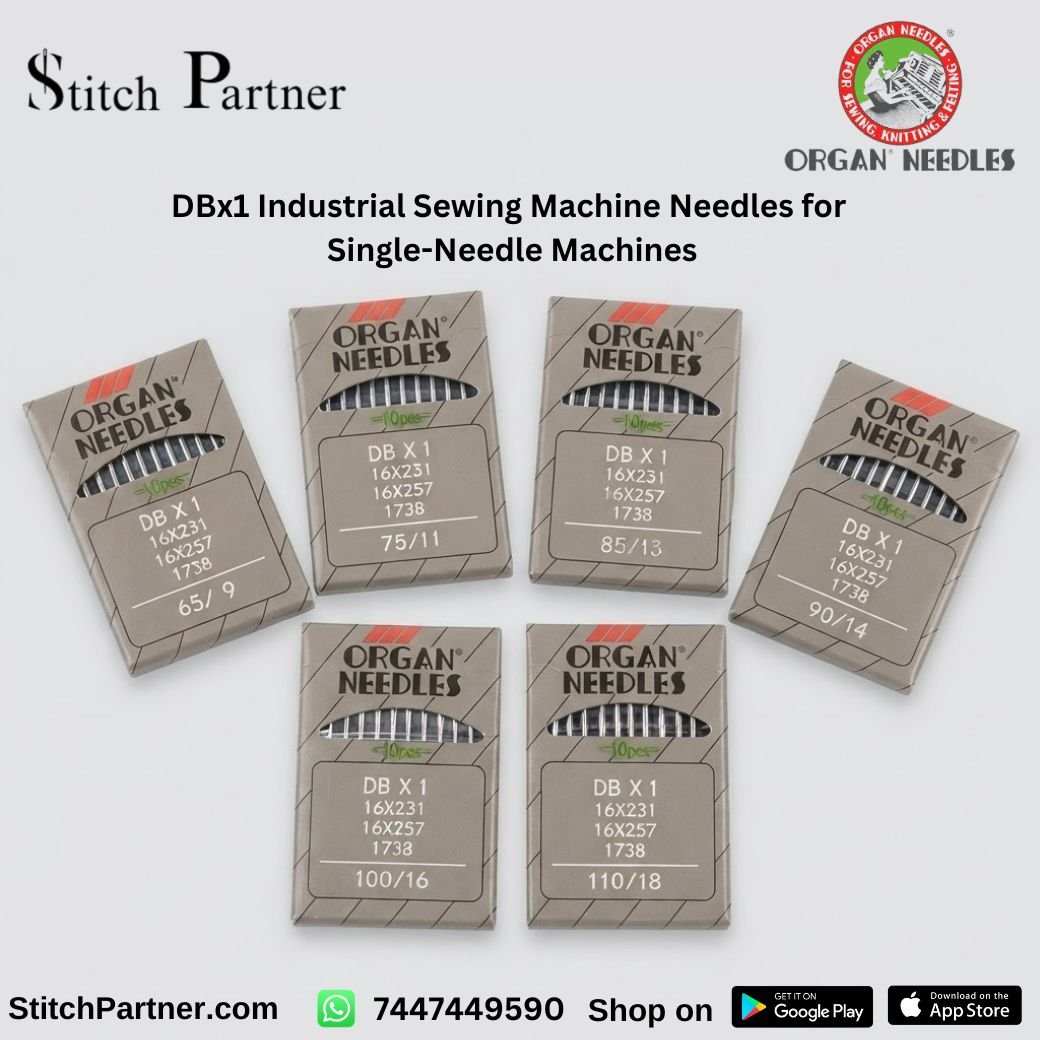
We stock DBx1 Industrial Sewing Needles compatible with Juki DDL-8700, JACK, Singer, and Brother single-needle lockstitch machines, along with the full सिलाई मशीन की सुइयाँ range for other systems and machine types.

अक्सर पूछे जाने वाले प्रश्नों
What needle system does my Juki or JACK lockstitch machine use?
Most single-needle lockstitch machines from both brands use DBx1. Always confirm against your specific model, since some heavier machines step up to system 134 or 1738A.
Can I use DBx1 needles in a walking foot machine?
No. Walking foot and compound-feed machines need the longer 135×17 (DPx17) blade. Using DBx1 in these machines causes the hook to arrive at the wrong position, resulting in skipped stitches.
Why does my machine skip stitches only on knit fabric?
This is usually a point-type mismatch. A round point (R) needle cuts knit loops instead of sliding between them. Switch to an FFG/SES ball-point needle for knits.
Do needle systems differ between brands like Juki, JACK, and Pegasus?
The needle system is determined by machine design, not brand loyalty. Many machines across different brands share the same needle system, which is why our DBx1 needles list compatibility across Juki, JACK, Singer, and Brother machines.
Related guides: JACK vs Juki Buying Guide | Presser Foot Types Guide | Tension Problems: The Pull Test
Written by Aashu, owner of Stitch Partner. We’ve spent years sourcing genuine sewing machine needles and spare parts for factories and tailors across India — this guide reflects what actually comes through our shop, not just spec sheets.


