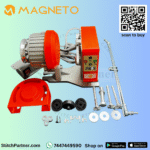
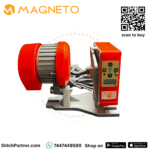
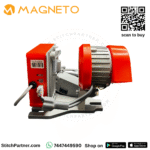
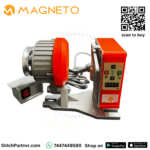
Servo Motor for Sewing Machine — 550W Power for Tailors and Garment Units
A servo motor for sewing machine setups is best for boutiques, tailoring shops, and garment manufacturing units that need reliable, high-speed stitching without the running cost of a clutch motor. It runs on pure copper winding at 550W, with speed up to 7000 RPM, so stitching stays consistent through long production runs. The motor connects to the machine head with a belt, comes with a built-in foot pedal, and includes an on/off switch with a slot for attaching an LED work light. It works as a straightforward servo motor for industrial sewing machine setups running lockstitch, interlock, or overlock heads side by side in the same unit.
Key Benefits
- Belt-driven servo motor built for standard industrial machine mounting
- 550W pure copper winding for consistent power output
- Speed up to 7000 RPM for high-output stitching in factories and busy tailor shops
- Built-in foot pedal — no separate pedal to buy or wire in
- On/off switch with a ready slot for attaching an LED work light
- Built to match Indian electricity supply conditions
- Low noise operation — near-silent at idle, more comfortable for all-day use
- Easy to fit — uses the same mounting bracket and handwheel belt as a standard clutch motor
Use Cases
Garment factories use this motor to keep multiple machines running through long shifts at a lower running cost than clutch motors. Tailoring shops rely on it for precise speed control when switching between light stitching and heavy-duty runs. Boutique owners use it to keep operating costs down while working close to customers. Because it fits lockstitch, interlock, and overlock machines, one motor design covers most of a small unit’s stitching stations.
Why Upgrade to a Servo Motor
A clutch motor stays engaged and draws power the entire time the machine is switched on, even between stitches. A servo motor for sewing machine setups only draws power while the needle is actually moving, which is why factories replacing clutch motors typically see a real drop in their monthly electricity bill. This motor runs on a standard belt drive to the machine head and is built to match Indian mains supply conditions, so it doesn’t need extra conversion equipment to run safely. If you’re weighing electric motor for sewing machine options in general — clutch, servo, or direct-drive — the belt-driven servo format stays closest to a standard clutch-motor swap: same bracket, same handwheel belt, no new wiring standard to learn.
Machine Compatibility
| Machine Type |
Compatible |
Notes |
| Lockstitch (single needle) |
Yes |
Fits standard industrial lockstitch heads |
| Interlock machines |
Yes |
Suitable for interlock stitching stations |
| Overlock machines |
Yes |
Handles overlock speed and load requirements |
| Bag closer / specialty heads |
Check first |
Confirm shaft and mounting size before ordering |
This belt-driven mounting uses the same standard bracket and handwheel-belt setup found across most single-needle industrial machines, including Jack, Juki, Brother, Siruba, and Pegasus models — if you’re specifically searching for a servo motor for your Jack or Juki machine, this motor’s standard mount fits without needing a different bracket. This motor ships with all mounting fittings and the drive belt included, so there’s nothing extra to source before installation.
Servo Motor vs Clutch Motor — How They Compare
| Factor |
Servo Motor (this motor) |
Clutch Motor |
| Power draw |
Only while the needle is moving |
Continuous, even between stitches |
| Noise |
Near-silent at idle |
Constant motor hum |
| Speed control |
Precise and consistent at low speed |
Harder to control at very low speed |
| Running cost |
Lower — typically 60–70% less electricity |
Higher, runs continuously |
| Best for |
Precision stitching, long shifts, mixed light/heavy work |
Simple, low-cost setups with less precision need |
Specifications
| Spec |
Detail |
| Motor Type |
Belt-driven servo motor |
| Power |
550W |
| Winding |
Pure copper |
| Max Speed |
7000 RPM |
| Machine Fit |
Lockstitch, Interlock, Overlock |
| Pedal |
Built-in foot pedal |
| Light Control |
On/off switch, dedicated LED slot |
| Electrical Compliance |
Built for Indian mains supply conditions |
| Build Quality |
Premium-grade construction |
How To Use
First, switch off the sewing machine completely before removing the old motor. Next, mount the new motor using the existing bracket and fit the drive belt, checking it sits correctly on the handwheel. Then, connect the wiring, noting the foot pedal is already built in, and confirm the on/off switch operates the attached light correctly. After that, run the machine at low speed first to check for unusual noise or vibration. Finally, gradually increase speed to your normal working range once the motor runs smoothly. Step-by-step installation videos, plus fixes for common errors, are available on the StitchPartner YouTube channel and the StitchPartner blog.
Frequently Asked Questions
Buyer Intent
How much electricity does a servo motor save compared to a clutch motor?
A servo motor for sewing machine use typically cuts electricity consumption by 60–70% compared to a clutch motor, since it only draws power while the needle is moving. A clutch motor stays engaged and draws current the whole time the machine is on, even during pauses.
Can this motor handle heavy fabric like denim or canvas?
Yes, but expect it to run warmer under sustained heavy loads than on light fabric. For all-day heavy-duty stitching, keep ventilation clear around the motor housing and avoid running it continuously at maximum RPM for extended periods.
Is a servo motor difficult to operate compared to a clutch motor?
No. The operator still uses the same foot pedal to control speed, so no retraining is needed. Only the person installing or servicing the motor needs to understand the wiring and calibration.
Does this motor come with its own foot pedal?
Yes, this motor comes with a built-in foot pedal, so there’s nothing extra to buy or wire in separately. It’s ready to connect and use once the motor is mounted and belted to the machine head.
What is the warranty on this motor?
This motor comes with a 6-month repair warranty covering manufacturing defects — if it develops a fault within that period, StitchPartner repairs it. Keep your order confirmation as proof of purchase when raising a warranty request.
Is this a genuine motor, or could it be a duplicate/copy part?
This is a genuine Magneto servo motor, not an unbranded copy — StitchPartner sells only genuine/original parts across its catalog. Duplicate or unbranded copies in this category commonly use lower-grade windings and bearings, which tends to show up as faster wear and less consistent speed control within months of daily use.
Should I get this 550W motor or a higher-wattage motor?
This motor already runs at up to 7000 RPM, while most other servo motors on the market top out around 4500 RPM — so the extra speed you’d be chasing in a higher-wattage motor is often already covered here. 550W at that speed handles standard lockstitch, interlock, and overlock work for most tailoring shops and garment units. A higher-wattage motor is only worth it if you’re running continuous heavy-material work — multiple layers of denim, canvas, or upholstery fabric — where the motor needs more sustained torque without running hot.
Compatibility
Will this motor fit my existing lockstitch machine without modification?
In most cases, yes, since it’s built for lockstitch, interlock, and overlock heads. Older machines may have a different mounting bracket or shaft size, so it’s worth checking the bracket and shaft diameter before ordering.
Can one motor design really work across lockstitch, interlock, and overlock machines?
Yes, the shaft and mounting design used here is common across these three machine types. Bag closer and other specialty heads should be confirmed separately, since their shaft dimensions can differ.
Troubleshooting
Why does the motor start running as soon as I switch on the machine, even without pressing the pedal?
This usually points to a wiring fault in the foot pedal connection or a stuck contact in the control board, not a fault in the motor itself. Disconnect the pedal and check the wiring first; if the motor still runs, the control board needs inspection.
The motor hums loudly during normal operation — is that normal?
A light hum during operation is normal for this motor type. A loud or grinding hum usually means incorrect wiring, a loose mounting bolt, or a misaligned belt, and is worth checking before continued use.
Why does my motor vibrate more than expected?
Vibration is often caused by loose mounting bolts, a misaligned belt, or the motor speed setting being higher than the stitching task needs. Recheck the mounting first, since it’s the most common and easiest fix.
Maintenance
How often should this motor be serviced?
For daily factory use, a quick check of mounting bolts, belt tension, and wiring every few months prevents most vibration and noise issues before they start. Light home or boutique use needs far less frequent attention.
Does the motor need lubrication like a clutch motor does?
Keeping the housing clean, the vents unblocked, and the belt correctly tensioned matters more for this motor type than lubrication. Check belt wear periodically since it’s a moving part that will need replacement over time.
Explore related parts: Motor Spares, LED work light for interlock and overlock machines, sewing machine needles, and Juki DDL lockstitch spare parts.