


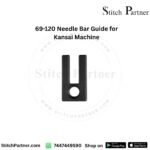
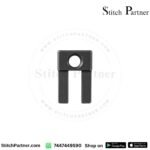

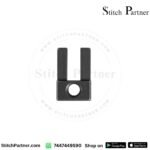
69-120 Needle Bar Guide Plate for Kansai Machines
Short Description
69-120 Needle Bar Guide Plate for compatible Kansai Special multi-needle elastic-attaching, chainstitch and smocking machines. Heat-treated steel construction with a polished guide channel for stable needle-bar movement. Pack of 1 piece.
₹300.00 Original price was: ₹300.00.₹120.00Current price is: ₹120.00.
69-120 Needle Bar Guide Plate for Kansai Special Multi-Needle Sewing Machines
Best For
The 69-120 Needle Bar Guide Plate is a precision replacement guide component for compatible multi-needle chainstitch, elastic-attaching and smocking machines. Its heat-treated steel construction and polished guide channel support smooth needle-bar travel and stable alignment during repeated industrial sewing cycles.
Key Features
- Precision guide plate for multi-needle needle-bar mechanisms.
- Part number 69-120 / 69120 for straightforward spare-part identification.
- Heat-treated steel construction for repeated industrial operation.
- Ground and mirror-polished guide channel for smooth movement.
- Helps control side-play and vibration in the needle-bar mechanism.
- Accurate mounting holes and slots simplify replacement and positioning.
- Supports consistent needle positioning across multi-needle configurations.
- Designed as a direct replacement for compatible machine configurations.
- Pack of 1 piece.
Use Cases
This guide plate is suitable for:
- Elastic waistband inserting
- Waistband and waistline operations
- Track-pants manufacturing
- Underwear production
- Smocking
- Multi-line decorative stitching
- Elastic garment production
- Industrial multi-needle sewing-machine maintenance
- Garment-factory machine rebuilding
Benefits
Supports Stable Needle-Bar Travel
The guide plate provides a controlled guiding surface for the needle-bar mechanism, helping maintain smooth movement during repeated sewing cycles.
Helps Maintain Multi-Needle Alignment
Multi-needle machines depend on consistent relative needle positioning. A correctly fitted guide plate helps keep the needle-bar mechanism stable during operation.
Heat-Treated Construction
The heat-treated steel construction provides a wear-resistant working component for machines operating under frequent mechanical movement.
Smooth Guide Channel
The polished guide channel creates a smooth contact surface, helping reduce unnecessary friction between the guide and associated moving components.
Accurate Replacement Positioning
The machined mounting holes and adjustment slots allow the replacement component to be positioned correctly within the original guide mechanism.
Machine Compatibility
Primary compatibility: Kansai Special multi-needle elastic-attaching, chainstitch and smocking machines.
Listed models: DFB-1404, DFB-1408, DFB-1412, DFB-4408, DFB-4412 and DVK-1702, including compatible 1400/4400-series configurations.
Additional stated compatibility: Siruba VC008, Jack, Highlead and other compatible Kansai-style multi-needle chainstitch machines.
Part Number: 69-120 / 69120
For machines outside the primary Kansai Special application, verify the existing part number and physical dimensions before purchasing.
Specifications
| Specification | Details |
|---|---|
| Product Type | Needle Bar Guide Plate |
| Part Number | 69-120 / 69120 |
| Machine Type | Multi-Needle Chainstitch |
| Application | Elastic Attaching / Smocking |
| Primary Machine Series | Kansai Special 1400 / 4400 |
| Construction | Heat-Treated Steel Alloy |
| Guide Surface | Ground & Polished |
| Function | Needle-Bar Alignment & Guidance |
| Fabric Application | Light to Heavy Elastic Materials |
| Pack Quantity | 1 Piece |
How To Use
First, switch off the sewing machine and disconnect the power supply before beginning mechanical maintenance.
Next, access the needle-bar guide mechanism and inspect the existing guide plate, mounting points and mating surfaces for wear or damage.
Then, remove the existing guide plate and install the replacement in the original position, ensuring the mounting holes and guide channel are correctly aligned with the machine mechanism.
Finally, manually move the needle-bar mechanism through its complete travel to confirm smooth movement and correct clearance before running the machine slowly with test material.
FAQs
What is a needle bar guide plate used for?
A needle bar guide plate provides a guiding surface that controls the movement of the needle-bar mechanism. On multi-needle machines, stable guidance helps maintain the relative position of multiple needles during repeated sewing cycles.
Is the 69-120 guide plate compatible with Kansai Special machines?
Yes. The supplied application identifies 69-120 / 69120 for Kansai Special DFB-1404, DFB-1408, DFB-1412, DFB-4408, DFB-4412 and DVK-1702 machines, along with compatible 1400/4400-series configurations.
Can a worn guide plate cause needle-bar movement?
Yes. Wear in the guide surface can increase clearance between mating components, allowing unwanted movement or side-play. Inspecting the guide plate is therefore important when a multi-needle machine develops excessive needle-bar movement.
What is the benefit of the polished guide channel?
The polished channel provides a smoother contact surface for the moving mechanism. This helps reduce friction at the guide interface and can limit unnecessary heat and surface wear during repeated operation.
Is this part used for elastic attaching?
Yes. The listed machine applications include multi-needle elastic-attaching operations such as waistband and waistline work. These applications require consistent needle positioning across multiple parallel rows of stitching.
Can this guide plate be used on Siruba VC008?
The supplied compatibility information lists Siruba VC008 as an additional compatible machine. Because machine revisions can differ, compare the existing guide plate’s part number, dimensions and mounting arrangement before ordering.
Can I use this on any multi-needle sewing machine?
No. Multi-needle machines can use different guide-plate dimensions and mounting arrangements. The machine’s general category is not enough to establish compatibility; the existing 69-120 / 69120 reference and physical configuration should be checked.
How do I know when the guide plate needs replacement?
Look for visible grooves, scoring, deformation or excessive clearance around the guide surface. Unusual needle-bar side movement, vibration or inconsistent needle positioning can also indicate wear in the guide mechanism.
Does replacing the guide plate automatically correct needle alignment?
No. The guide plate provides the mechanical guiding surface, but correct installation and machine adjustment are still required. After replacement, the needle-bar movement and clearances should be checked before returning the machine to production.
Should I replace other components at the same time?
Not automatically. Inspect the mating needle-bar components, mounting hardware and related guide surfaces first. Replace additional parts only when they show wear, damage or excessive clearance.

YDL Professional Cloth Cutting Scissors 10, 11, 12 Inch – Tailor Scissors
In stock

PIN 696 Electric Scissors – Cordless Rechargeable Fabric Cutter
In stock

Imported Magneto Mini Portable Bag Closer Machine GK-9 Series
In stock

Portable Mini Sewing Kit Box with 15 Color Threads
In stock

MESSER 125mm Cloth Cutting Machine | 350W Heavy Duty Electric Fabric Cutter | कपड़ा कटिंग मशीन
In stock

YS-4454 Button Holer Attachment for Sewing Machines
In stock

NRV 1/2 Inch Non-Return Valve for Steam Iron
In stock

18A/25A Contactor for Industrial Steam Iron Boiler
In stock
Product Description
69-120 Needle Bar Guide Plate for Kansai Special Multi-Needle Sewing Machines
Best For
The 69-120 Needle Bar Guide Plate is a precision replacement guide component for compatible multi-needle chainstitch, elastic-attaching and smocking machines. Its heat-treated steel construction and polished guide channel support smooth needle-bar travel and stable alignment during repeated industrial sewing cycles.
Key Features
- Precision guide plate for multi-needle needle-bar mechanisms.
- Part number 69-120 / 69120 for straightforward spare-part identification.
- Heat-treated steel construction for repeated industrial operation.
- Ground and mirror-polished guide channel for smooth movement.
- Helps control side-play and vibration in the needle-bar mechanism.
- Accurate mounting holes and slots simplify replacement and positioning.
- Supports consistent needle positioning across multi-needle configurations.
- Designed as a direct replacement for compatible machine configurations.
- Pack of 1 piece.
Use Cases
This guide plate is suitable for:
- Elastic waistband inserting
- Waistband and waistline operations
- Track-pants manufacturing
- Underwear production
- Smocking
- Multi-line decorative stitching
- Elastic garment production
- Industrial multi-needle sewing-machine maintenance
- Garment-factory machine rebuilding
Benefits
Supports Stable Needle-Bar Travel
The guide plate provides a controlled guiding surface for the needle-bar mechanism, helping maintain smooth movement during repeated sewing cycles.
Helps Maintain Multi-Needle Alignment
Multi-needle machines depend on consistent relative needle positioning. A correctly fitted guide plate helps keep the needle-bar mechanism stable during operation.
Heat-Treated Construction
The heat-treated steel construction provides a wear-resistant working component for machines operating under frequent mechanical movement.
Smooth Guide Channel
The polished guide channel creates a smooth contact surface, helping reduce unnecessary friction between the guide and associated moving components.
Accurate Replacement Positioning
The machined mounting holes and adjustment slots allow the replacement component to be positioned correctly within the original guide mechanism.
Machine Compatibility
Primary compatibility: Kansai Special multi-needle elastic-attaching, chainstitch and smocking machines.
Listed models: DFB-1404, DFB-1408, DFB-1412, DFB-4408, DFB-4412 and DVK-1702, including compatible 1400/4400-series configurations.
Additional stated compatibility: Siruba VC008, Jack, Highlead and other compatible Kansai-style multi-needle chainstitch machines.
Part Number: 69-120 / 69120
For machines outside the primary Kansai Special application, verify the existing part number and physical dimensions before purchasing.
Specifications
| Specification | Details |
|---|---|
| Product Type | Needle Bar Guide Plate |
| Part Number | 69-120 / 69120 |
| Machine Type | Multi-Needle Chainstitch |
| Application | Elastic Attaching / Smocking |
| Primary Machine Series | Kansai Special 1400 / 4400 |
| Construction | Heat-Treated Steel Alloy |
| Guide Surface | Ground & Polished |
| Function | Needle-Bar Alignment & Guidance |
| Fabric Application | Light to Heavy Elastic Materials |
| Pack Quantity | 1 Piece |
How To Use
First, switch off the sewing machine and disconnect the power supply before beginning mechanical maintenance.
Next, access the needle-bar guide mechanism and inspect the existing guide plate, mounting points and mating surfaces for wear or damage.
Then, remove the existing guide plate and install the replacement in the original position, ensuring the mounting holes and guide channel are correctly aligned with the machine mechanism.
Finally, manually move the needle-bar mechanism through its complete travel to confirm smooth movement and correct clearance before running the machine slowly with test material.
FAQs
What is a needle bar guide plate used for?
A needle bar guide plate provides a guiding surface that controls the movement of the needle-bar mechanism. On multi-needle machines, stable guidance helps maintain the relative position of multiple needles during repeated sewing cycles.
Is the 69-120 guide plate compatible with Kansai Special machines?
Yes. The supplied application identifies 69-120 / 69120 for Kansai Special DFB-1404, DFB-1408, DFB-1412, DFB-4408, DFB-4412 and DVK-1702 machines, along with compatible 1400/4400-series configurations.
Can a worn guide plate cause needle-bar movement?
Yes. Wear in the guide surface can increase clearance between mating components, allowing unwanted movement or side-play. Inspecting the guide plate is therefore important when a multi-needle machine develops excessive needle-bar movement.
What is the benefit of the polished guide channel?
The polished channel provides a smoother contact surface for the moving mechanism. This helps reduce friction at the guide interface and can limit unnecessary heat and surface wear during repeated operation.
Is this part used for elastic attaching?
Yes. The listed machine applications include multi-needle elastic-attaching operations such as waistband and waistline work. These applications require consistent needle positioning across multiple parallel rows of stitching.
Can this guide plate be used on Siruba VC008?
The supplied compatibility information lists Siruba VC008 as an additional compatible machine. Because machine revisions can differ, compare the existing guide plate’s part number, dimensions and mounting arrangement before ordering.
Can I use this on any multi-needle sewing machine?
No. Multi-needle machines can use different guide-plate dimensions and mounting arrangements. The machine’s general category is not enough to establish compatibility; the existing 69-120 / 69120 reference and physical configuration should be checked.
How do I know when the guide plate needs replacement?
Look for visible grooves, scoring, deformation or excessive clearance around the guide surface. Unusual needle-bar side movement, vibration or inconsistent needle positioning can also indicate wear in the guide mechanism.
Does replacing the guide plate automatically correct needle alignment?
No. The guide plate provides the mechanical guiding surface, but correct installation and machine adjustment are still required. After replacement, the needle-bar movement and clearances should be checked before returning the machine to production.
Should I replace other components at the same time?
Not automatically. Inspect the mating needle-bar components, mounting hardware and related guide surfaces first. Replace additional parts only when they show wear, damage or excessive clearance.
Item #2

Fast Shipping
Carrier information

COD Availabe
Payment methods


