

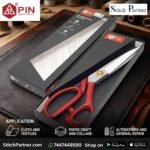
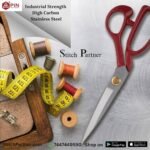
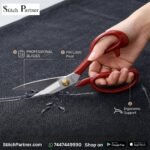
PIN Cloth Cutting Scissor – Professional Fabric Cutting Scissors for Tailors, Boutiques & Garment Factories
A good pair of fabric scissors is one of the most important tools in any tailoring or garment production setup. Clean cutting not only improves stitching quality but also saves fabric, reduces finishing work, and increases productivity. The PIN Cloth Cutting Scissor is designed specifically for professional fabric cutting where accuracy, comfort, and durability matter.
PIN Scissors Price List – 10, 11 & 12 Inch with Free Thread Cutter
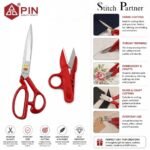
Here are the current prices of PIN tailoring scissors at StitchPartner. The PIN scissors 10 inch is ₹549, the PIN scissors 11 inch price is ₹599, and the PIN scissors 12 inch price is ₹649. Every pair comes with a free thread cutter, so you get a complete cutting and trimming set in one order.
| Size | Best for | Our price | Regular price |
| PIN 10 inch | Home sewing, boutique work, pattern cutting | ₹549 | ₹750 |
| PIN 11 inch | Daily tailoring shop use, medium-volume cutting | ₹599 | ₹800 |
| PIN 12 inch | Garment factories, large panels, multiple layers | ₹649 | ₹900 |
The PIN tailoring scissors price in India at our shop starts at ₹549 for one pair, and the price shown on the product page above is always the final price. We offer cash on delivery on orders above ₹249 with pan-India delivery from our Nagpur shop, which has served tailors since 1989. Delivery is free on orders of ₹999 and above, and you get 7-day returns. If you are unsure which size to pick, message us on WhatsApp at +91 74474 49590 and we will help you choose.
Looking for a premium 12-inch pair instead? See the PIN-7300 professional tailoring scissors 12 inch. You can also browse every pair in our cloth cutting scissors range.
Unlike ordinary household scissors, PIN tailor scissors are engineered for textile applications. The carefully hardened tempered steel blades maintain a sharp cutting edge for longer, while the heavy-duty forged metal construction provides excellent balance and strength during continuous use.
Professional tailors often cut hundreds of fabric panels every day. Poor-quality scissors can cause uneven edges, frayed fabric, excessive hand fatigue, and inaccurate cutting. PIN Cloth Cutting Scissors help overcome these problems by delivering controlled, smooth, and consistent cuts across different fabric types.
The scissors are widely used in:
- Professional tailoring shops
- Garment manufacturing units
- Boutique businesses
- Fashion design studios
- Textile sampling departments
- Upholstery workshops
- Curtain manufacturers
- Uniform manufacturers
- Home sewing enthusiasts
- Fabric cutting workstations
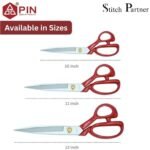
Because they are available in 10-inch, 11-inch, and 12-inch sizes, buyers can select the most suitable option according to the thickness of the fabric, cutting length, and daily workload.
Professional Tempered Steel Blades for Long-Lasting Sharpness
The blade is the heart of every cloth cutting scissor. PIN Cloth Cutting Scissors use high-quality tempered steel blades that are designed to retain sharpness longer than ordinary scissors used for general household work.
Tempering improves the hardness and durability of the steel, allowing the cutting edge to withstand continuous professional use without losing performance quickly. This helps maintain smooth cutting action even after repeated daily use in tailoring shops and garment production environments.
The precision-ground blades produce:
- Smooth fabric cutting
- Straight cutting lines
- Reduced fraying
- Better cutting accuracy
- Consistent performance on different fabric types
A sharp blade also requires less cutting force, helping reduce hand strain during long working hours.
Deep Precision Blade Groove for Better Fabric Control
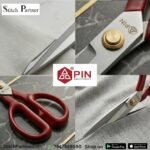
One of the standout design features of the PIN Cloth Cutting Scissor is the deep precision groove inside the cutting blades.
During fabric cutting, smooth materials such as satin, polyester, rayon, silk, or lightweight cotton can sometimes shift between the blades, causing uneven cuts. The specially designed groove helps keep the fabric positioned more securely while cutting.
Benefits of the deep blade groove include:
- Better fabric stability
- Reduced slipping during cutting
- Improved cutting precision
- Cleaner cutting lines
- Easier handling of layered fabrics
- Better control during long straight cuts
This feature is particularly useful for professional tailors who regularly cut garment panels, collars, sleeves, cuffs, pockets, and patterned fabric pieces where accuracy is important.
Heavy-Duty Forged Metal Construction
Professional tailoring scissors experience constant opening, closing, and pressure throughout the day. To withstand this demanding work, the PIN Cloth Cutting Scissor is manufactured using a forged metal body.
Forging creates a stronger and more durable structure compared to lightweight stamped scissors, making the tool suitable for continuous commercial use.
The strong construction offers several advantages:
- Higher durability
- Better cutting stability
- Improved balance
- Long service life
- Reliable performance during continuous operation
The solid metal body also provides the weight needed for smoother cutting, allowing the blades to glide naturally through fabric with less effort.
Comfortable Rubber Grip for Reduced Hand Fatigue
Professional tailors may use scissors for several hours every day. Comfort becomes just as important as blade sharpness.
PIN Cloth Cutting Scissors feature a rubber grip handle that provides a secure and comfortable hold during extended use.
The ergonomic grip helps:
- Improve handling
- Reduce hand fatigue
- Provide better cutting control
- Minimize slipping
- Increase comfort during long working hours
The combination of the forged metal frame and cushioned rubber grip creates a balanced cutting experience suitable for both professional and frequent users.
Suitable for Cutting Multiple Fabric Types
A professional tailor rarely works with only one type of material. Different garments require different fabrics, making versatility an important feature.
PIN Cloth Cutting Scissors are suitable for cutting many commonly used textile materials, including:
- Cotton
- Denim
- Canvas
- Polyester
- Linen
- Silk
- Rayon
- Blended fabrics
- Upholstery fabric
- Leather (light to medium thickness)
- Uniform fabrics
- Suiting materials
- Shirting fabrics
- Quilting fabrics
- Craft fabrics
The sharp tempered steel blades allow smooth cutting across both lightweight and relatively thicker textile materials without frequent sharpening.
Available in Multiple Sizes
Different tailoring applications require different blade lengths. PIN Cloth Cutting Scissors are available in:
10 Inch Cloth Cutting Scissor
Ideal for:
- Home sewing
- Boutique work
- Small garment cutting
- Pattern cutting
- Daily tailoring
11 Inch Cloth Cutting Scissor
Suitable for:
- Professional tailoring shops
- Medium-volume cutting
- Garment production
- Textile workshops
12 Inch Cloth Cutting Scissor
Recommended for:
- Garment factories
- Industrial cutting tables
- Large fabric panels
- Multiple fabric layers
- Heavy-duty tailoring applications
Selecting the correct size helps improve cutting speed, precision, and overall comfort depending on the type of work performed.
Built for Professional Tailoring Applications
PIN Cloth Cutting Scissors are designed to meet the demands of professionals who require dependable cutting tools every day. Their combination of sharp tempered steel blades, forged metal construction, ergonomic grip, and precision blade design makes them suitable for both routine tailoring tasks and high-volume garment production.
Whether cutting individual garment pieces or preparing fabric for large production runs, these scissors provide the stability and control needed for clean, accurate results while helping reduce cutting effort over long periods of use.
Why Professional Tailors Choose PIN Cloth Cutting Scissors
Professional tailors, garment manufacturers, fashion designers, and alteration specialists rely on cutting tools that deliver consistent results throughout the working day. A fabric cutting scissor should not only be sharp but also comfortable, durable, and capable of maintaining accuracy over thousands of cuts.
PIN Cloth Cutting Scissors are designed to meet these requirements by combining hardened tempered steel blades, a forged metal body, and an ergonomic rubber grip. The addition of a precision blade groove helps keep fabric stable during cutting, allowing users to achieve cleaner edges with better control.
Professionals choose PIN scissors because they offer:
- Smooth and accurate fabric cutting
- Heavy-duty construction for everyday use
- Comfortable grip for long working hours
- Sharp cutting edges with long service life
- Better control on straight and curved cuts
- Suitable for multiple fabric types
- Available in three practical sizes for different applications
Whether you operate a tailoring shop, boutique, garment factory, or home sewing business, PIN Cloth Cutting Scissors are built to improve cutting efficiency while maintaining professional-quality results.
Key Features of PIN Cloth Cutting Scissors
Tempered Steel Cutting Blades
The cutting performance of any tailoring scissor depends on blade quality. PIN Cloth Cutting Scissors feature tempered steel blades that are engineered to provide long-lasting sharpness and reliable cutting performance.
Advantages include:
- Excellent edge retention
- Smooth cutting action
- Reduced fabric fraying
- Lower cutting resistance
- Consistent cutting accuracy
The blades are suitable for both everyday tailoring work and commercial garment production.

Heavy Forged Metal Body
Unlike lightweight household scissors, PIN scissors are manufactured using a forged metal body that improves durability and balance.
Benefits include:
- Strong construction
- Better weight distribution
- Improved stability
- Long operational life
- Suitable for continuous professional use
The balanced design also helps the blades glide naturally through fabric with less effort.
Comfortable Rubber Grip Handle
Long cutting sessions can place significant stress on the hands and wrists. PIN Cloth Cutting Scissors include a soft rubber grip designed to improve comfort without compromising control.
The ergonomic handle helps:
- Reduce hand fatigue
- Improve grip during extended use
- Minimize slipping
- Enhance cutting precision
- Increase user comfort
This makes the scissors suitable for professionals who spend several hours cutting fabric every day.

Precision Blade Groove for Better Fabric Stability
A unique feature of the PIN Cloth Cutting Scissor is the precision groove built into the cutting blades.
During cutting, smooth fabrics sometimes move between the blades, leading to uneven edges. The groove helps keep the material positioned more securely, allowing greater cutting accuracy.
This feature is especially beneficial when cutting:
- Polyester
- Satin
- Silk
- Rayon
- Cotton
- Multiple fabric layers
Better fabric control helps improve cutting quality while reducing material waste.

Corrosion-Resistant Steel Construction
The tempered steel blades are designed to resist normal corrosion better than untreated steel when maintained properly.
With regular cleaning and proper storage, the scissors continue delivering dependable cutting performance over an extended period.
Simple maintenance includes:
- Cleaning lint after use
- Wiping the blades dry
- Applying light machine oil occasionally
- Storing the scissors in a dry place
Proper care helps preserve blade sharpness and overall cutting performance.
Applications of PIN Cloth Cutting Scissors
PIN Cloth Cutting Scissors are suitable for a wide range of professional and commercial textile applications.
Tailoring Shops
Professional tailors use these scissors for:
- Shirt cutting
- Pant cutting
- Blouse cutting
- Kurti stitching
- Salwar cutting
- School uniforms
- Alteration work
Boutique Businesses
Boutique owners require precision when cutting designer garments and custom-made clothing. The sharp blades help produce neat edges that improve garment finishing.
Garment Factories
Large garment production units require reliable scissors capable of continuous operation.
Typical factory applications include:
- Fabric panel cutting
- Collar preparation
- Pocket cutting
- Sleeve cutting
- Sample development
- Production line trimming
Fashion Design Studios
Fashion designers often work with delicate materials that require accurate cutting.
PIN Cloth Cutting Scissors help create:
- Sample garments
- Fashion prototypes
- Designer collections
- Pattern pieces
Upholstery Workshops
The scissors are suitable for cutting upholstery fabrics used in:
- Sofas
- Chairs
- Cushions
- Decorative fabrics
- Interior textiles
Home Sewing
Home users and sewing enthusiasts can use PIN scissors for:
- DIY sewing projects
- Quilting
- Hobby crafts
- Fabric repairs
- Dressmaking
Fabric Compatibility
PIN Cloth Cutting Scissors are designed to cut many commonly used textile materials.
Compatible fabrics include:
- Cotton
- Denim
- Canvas
- Linen
- Polyester
- Rayon
- Silk
- Wool blends
- Uniform fabric
- Upholstery fabric
- Felt
- Leather (light to medium thickness)
- Synthetic fabrics
- Blended textiles
- Quilting fabric
Using the correct scissor size for the fabric thickness improves both cutting performance and blade life.
How to Choose the Right Size
Selecting the correct scissor size depends on the type of work you perform.
10 Inch
Recommended for:
- Home sewing
- Boutique work
- Small garments
- Pattern cutting
- Fine detail cutting
11 Inch
Best suited for:
- Professional tailoring
- Daily workshop use
- Medium-volume production
- Mixed fabric applications
12 Inch
Ideal for:
- Garment factories
- Bulk production
- Large fabric panels
- Thick fabrics
- Multiple fabric layers
Longer blades generally cover more fabric with each cut, while shorter blades offer greater control for detailed work.
Buying Guide – How to Select the Best Cloth Cutting Scissor
Before purchasing a professional cloth cutting scissor, consider these factors:
Blade Quality
Choose tempered steel blades that maintain sharpness for longer periods.
Handle Comfort
An ergonomic rubber grip improves comfort during prolonged cutting sessions.
Construction
Forged metal scissors generally offer greater durability and stability than lightweight alternatives.
Fabric Type
Consider the fabrics you cut most frequently. Heavy materials such as denim and canvas often benefit from larger scissors.
Size Selection
Select 10″, 11″, or 12″ based on your cutting volume and preferred handling.
Daily Usage
Professionals working continuously should prioritize durability, comfort, and blade quality over initial cost.
Maintenance Tips
Proper maintenance extends the life of professional fabric scissors.
Recommended practices include:
- Use the scissors only for fabric.
- Avoid cutting paper, plastic, wire, or metal.
- Wipe the blades after each use.
- Remove lint from the blade joint.
- Store in a dry location.
- Apply a small amount of machine oil to the pivot screw periodically.
- Check the pivot screw occasionally and tighten it if it becomes loose.
- Keep the cutting edges protected during storage.
Common Mistakes to Avoid When Buying Cloth Cutting Scissors
Choosing the right cloth cutting scissor involves more than selecting a blade length or the lowest price. Many buyers unknowingly purchase scissors that are not suitable for professional tailoring, resulting in poor cutting quality, increased hand fatigue, and reduced blade life.
Before purchasing, avoid these common mistakes:
- Buying household scissors for professional tailoring work
- Selecting the wrong blade size for your daily cutting requirements
- Ignoring handle comfort for long working hours
- Choosing low-quality steel blades that lose sharpness quickly
- Using the same scissors for fabric, paper, plastic, and other materials
- Not considering the durability of the scissor body and blade construction
Professional tailors typically use dedicated fabric scissors and avoid cutting paper or hard materials, helping maintain blade sharpness and cutting accuracy for a much longer period.
Signs Your Cloth Cutting Scissor Needs Replacement
Even high-quality tailoring scissors gradually wear with continuous professional use. Recognizing the early signs of wear helps maintain cutting accuracy and prevents unnecessary fabric wastage.
You should consider servicing or replacing your scissors if you notice:
- Fabric folding or slipping between the blades during cutting
- Increased effort required to complete each cut
- Frayed or uneven fabric edges
- Blade tips no longer aligning correctly
- Excessive play or looseness around the pivot screw
- Visible chips, dents, or damage on the cutting edge
- Reduced cutting accuracy despite proper maintenance
Replacing worn scissors at the right time helps maintain productivity and consistent garment quality.
Professional Support from StitchPartner
At StitchPartner.com, we work closely with professional tailors, boutique owners, garment manufacturers, fashion designers, upholstery workshops, and textile businesses across India. Based on customer requirements, fabric types, and daily production needs, we help buyers select the most suitable cloth cutting scissors for their applications.
For precision tailoring, pattern cutting, and boutique work, smaller sizes generally offer greater control. For regular workshop use, many professionals prefer medium-sized scissors that balance cutting speed and comfort, while large garment production units often choose longer blades for faster cutting of large fabric panels and multiple fabric layers.
Our industry experience allows us to recommend the right tailoring tools based on practical usage rather than specifications alone, helping customers choose equipment that delivers reliable performance in real working environments.
When you order from StitchPartner.com, you benefit from:
- Genuine quality tailoring tools
- Pan-India delivery
- GST invoice for business purchases
- Cash on Delivery (where available)
- Customer support for product selection
- Wide range of sewing machine accessories and cutting tools
- Trusted supplier for tailors, boutiques, garment factories, and textile businesses
Whether you are replacing old fabric scissors or setting up a new tailoring workshop, StitchPartner.com offers products designed for professional use.
Technical Specifications
| Specification | Details |
| Product Name | PIN Cloth Cutting Scissor |
| Brand | PIN |
| Category | Cloth Cutting Scissors |
| Available Sizes | 10 Inch, 11 Inch, 12 Inch |
| Blade Material | Tempered Steel |
| Handle Material | Forged Metal with Rubber Grip |
| Blade Design | Precision Deep Groove |
| Suitable Materials | Cotton, Denim, Canvas, Linen, Polyester, Silk, Rayon, Upholstery Fabric, Blended Fabrics, Light to Medium Leather |
| Applications | Tailoring, Garment Manufacturing, Boutique, Upholstery, Textile Industry, Fashion Design, Home Sewing |
Heavy Duty PIN Tailoring Scissors in India – Sizes, Numbers and Uses
These heavy duty PIN tailoring scissors are made for daily cloth cutting in tailoring shops, boutiques and garment units. If you want PIN brand scissors in India with cash on delivery, you can order the 10, 11 or 12 inch size straight from our Nagpur shop. The professional PIN tailoring scissors price here starts at ₹549, and every pair includes a free thread cutter.
Many Indian tailors ask for scissors by number, such as 10 number, 11 number or 12 number. The number matches the blade size in inches. So the 12 number PIN kainchi is the 12 inch pair at ₹649, the 11 number is the 11 inch pair at ₹599, and the 10 number is the 10 inch pair at ₹549.
PIN tailoring scissors are used for cutting shirts, trousers, blouses, kurtis, school uniforms and upholstery fabric. The tempered steel blades and the deep blade groove help with cotton, denim, silk, polyester and canvas. They suit tailors, boutique owners, garment factories and home sewers alike.
Which PIN Scissor Fits Your Work? Compare Our PIN Models
StitchPartner stocks more than one PIN cutting tool. Use this table to pick the one that matches your fabric, daily volume and budget.
| Model | Size | Price | Best for |
| PIN Cloth Cutting Scissors (this page) | 10, 11, 12 inch | ₹549 to ₹649 | Daily tailoring and boutique cutting, free thread cutter included |
| PIN-7300 Professional Tailoring Scissors | 12 inch | ₹1,299 | Buyers who want a premium 12-inch pair for daily cutting |
| PIN 696 Electric Scissors (cordless) | Electric | See product page | Long cutting runs on light and medium fabrics |
| Jupiter Tailor Scissor | 9 to 12 inch | ₹230 to ₹300 | A lower-priced hand scissor for lighter daily work |
Still deciding between brands? Our cloth cutting scissors buying guide for India compares PIN, Jupiter and Usha side by side. If you cut many layers all day, the electric fabric scissors guide explains when a powered cutter saves more time than a hand scissor.
Buyer FAQs
1. Are PIN cloth cutting scissors suitable for left-handed users?
PIN Cloth Cutting Scissors are primarily designed with a right-handed blade orientation, which is the standard configuration used in most tailoring workshops. Left-handed users can operate them, but visibility of the cutting line and cutting comfort may not be as good as with dedicated left-handed scissors. Professional left-handed tailors usually achieve better accuracy with scissors specifically designed for left-handed use. If multiple operators share the same scissors in a garment factory, a right-handed model remains the most practical choice because it suits the majority of users.
2. How long do professional tailoring scissors usually stay sharp?
Blade life depends more on usage than age. In most tailoring shops, PIN cloth cutting scissors can remain sharp for several months to over a year before professional sharpening is needed. Cutting only fabric significantly extends blade life, while paper, cardboard, plastic packing straps, or metal pins dull the cutting edge much faster. Many technicians recommend sharpening only when cutting effort noticeably increases because excessive sharpening gradually reduces blade geometry and overall service life.
3. Can these scissors replace an electric fabric cutting machine?
Not completely. Professional cloth cutting scissors are ideal for precision cutting, pattern making, alterations, sample development, and low to medium production work. Electric cloth cutting machines become more efficient when cutting many fabric layers or handling continuous production in garment factories. Many workshops actually use both tools together—electric cutters for bulk panel cutting and professional scissors for detailed finishing, trimming, curves, collars, cuffs, and alteration work.
4. Why do professional tailors often own more than one fabric scissor?
Experienced tailors rarely rely on a single pair of scissors. Many keep separate scissors for lightweight fabrics, denim, delicate materials, and thread trimming. This reduces unnecessary blade wear and helps maintain cutting accuracy. Some workshops also reserve one pair exclusively for premium fabrics such as silk or bridal materials to minimize contamination from adhesives, interfacing residue, or coarse textiles. Using dedicated scissors for different jobs is a common workshop practice that extends blade life.
5. Are PIN cloth cutting scissors suitable for commercial tailoring businesses?
Yes. Their forged metal construction and tempered steel blades make them suitable for regular professional use in tailoring shops, boutiques, alteration centers, and garment production units. However, extremely high-volume factories that operate continuously throughout the day often supplement manual scissors with electric fabric cutting machines to improve productivity. Professional scissors remain essential for finishing work, sample cutting, quality inspection, and detailed garment shaping where electric cutters are less practical.
6. What makes professional tailoring scissors different from ordinary household scissors?
Professional fabric scissors are engineered specifically for textile cutting. They typically feature longer blades, improved blade alignment, stronger pivot construction, better balance, and hardened steel that maintains a sharper cutting edge for longer. Household scissors are designed for general-purpose cutting and usually lose precision quickly when used on fabric. Professional tailoring scissors also provide smoother cutting across long fabric panels, reducing jagged edges and operator fatigue during repetitive work.
7. Should fabric scissors be sharpened at home?
Simple sharpening tools may restore a basic edge, but professional sharpening is usually recommended for tailoring scissors. The blade angle, edge geometry, and blade alignment must remain accurate to maintain clean fabric cutting. Incorrect sharpening can permanently reduce cutting performance or create blade gaps that cause fabrics to fold instead of cutting cleanly. Professional sharpening also includes checking pivot tension, blade alignment, and edge consistency, which household sharpeners cannot normally achieve.
8. Are these scissors a good investment for beginners learning tailoring?
Yes, provided they are used exclusively for fabric. Beginners often struggle with inaccurate cutting because inexpensive scissors flex, lose sharpness quickly, or fail to cut long straight lines cleanly. Starting with a quality fabric scissor helps develop better cutting habits and improves pattern accuracy. Although professional scissors cost more initially, they generally last much longer with proper maintenance, making them a better long-term investment than replacing low-quality scissors repeatedly.
9. Why are the scissors folding fabric instead of cutting it cleanly?
This usually indicates a dull cutting edge, incorrect pivot tension, or slight blade misalignment. Fabric folding is more noticeable on lightweight materials such as silk, rayon, and polyester. Check that the pivot screw is properly tightened and clean any lint trapped between the blades. If cutting performance does not improve, professional sharpening is recommended. Continuing to use dull scissors increases hand effort and may stretch or distort delicate fabrics before they are cut.
10. Why do the blades separate while cutting thick fabric?
Blade separation generally occurs when excessive pressure is applied, the pivot screw becomes loose, or the fabric exceeds the practical cutting capacity of the scissors. Cutting too many layers simultaneously can also force the blades apart. Tightening the pivot correctly often improves performance. For thick denim stacks, upholstery materials, or continuous multi-layer cutting, an electric cloth cutting machine may provide more consistent results than manual scissors.
11. Why does the pivot screw become loose after long-term use?
Repeated opening and closing gradually create vibration that can loosen the pivot screw over time. This is common with frequently used professional scissors and does not necessarily indicate poor quality. Periodically checking the screw and adjusting it to maintain smooth blade movement helps preserve cutting accuracy. The blades should move freely without excessive side play. Over-tightening should also be avoided because it increases cutting resistance and accelerates wear.
12. Why do the scissors feel harder to operate after several months?
In most cases, accumulated lint, dried oil, adhesive residue from interfacing, or minor corrosion around the pivot increases friction. Cleaning the blades, lubricating the pivot with a drop of sewing machine oil, and removing trapped fibers usually restores smoother movement. If resistance remains after cleaning, professional servicing may be needed to correct blade alignment or restore the cutting edge. Regular maintenance greatly reduces this problem in busy tailoring workshops.
13. Can PIN cloth cutting scissors be used for cutting sewing patterns?
Yes. They are commonly used for transferring and cutting garment patterns from fabric. However, many professional pattern makers keep separate scissors for paper patterns because cutting paper gradually dulls fabric scissors. Using dedicated fabric scissors only for textiles helps maintain cleaner edges and extends sharpening intervals. This separation of tools is a common practice in professional garment manufacturing and tailoring schools.
14. Are these scissors suitable for synthetic technical fabrics?
They can cut many synthetic textiles such as polyester, nylon, microfiber, and blended fabrics used in sportswear, uniforms, and industrial garments. Performance depends on fabric thickness and density rather than fiber type alone. Very abrasive technical textiles containing fiberglass, carbon fiber, or reinforced composite materials are not recommended because they accelerate blade wear and may require specialized industrial cutting tools.
15. Can these scissors cut fusible interfacing and non-woven materials?
Yes. Professional tailors frequently use them for fusible interfacing, non-woven fabrics, lining materials, and stabilizers during garment construction. However, adhesive-coated interfacing can leave residue on the blades over time. Wiping the blades after use prevents adhesive buildup, maintains smoother cutting, and reduces long-term cleaning effort. Regular blade cleaning is especially important when interfacing is used daily in production.
16. Can these scissors be used in leathercraft?
They are suitable for light to medium leather, garment leather, faux leather, suede, and similar flexible materials. Thick vegetable-tanned leather, saddle leather, or heavy industrial leather generally requires dedicated leather shears, rotary cutters, or specialized leather cutting tools. Attempting to cut excessively thick leather with fabric scissors can shorten blade life and affect cutting precision on textile materials afterward.
17. How often should professional fabric scissors be professionally sharpened?
There is no fixed schedule because sharpening depends on workload and fabric type. In a busy tailoring shop, inspection every six to twelve months is common, while lighter home use may require sharpening much less frequently. Sharpen only when cutting quality declines rather than following a calendar. Unnecessary sharpening removes blade material and can shorten the overall lifespan of the scissors.
18. What is the correct way to store professional tailoring scissors?
Store the scissors closed in a dry location where the cutting edges cannot strike other metal tools. Many workshops keep them in a protective sheath, dedicated drawer, or hanging rack to prevent accidental damage. Avoid dropping the scissors because even minor impacts can affect blade alignment. Proper storage preserves cutting accuracy and reduces the likelihood of corrosion in humid environments.
19. Can sewing machine oil be used on fabric scissors?
Yes. A single drop of high-quality sewing machine oil on the pivot joint is commonly recommended because it reduces friction without leaving excessive residue. After applying oil, open and close the scissors several times and wipe away any excess before cutting fabric. Excess lubricant should never remain on the blades because it can transfer to fabrics and cause staining, particularly on light-colored materials.
20. What maintenance mistake shortens the life of tailoring scissors the most?
The most common mistake is using fabric scissors for non-textile materials such as paper, cardboard, plastic packaging, cable ties, or thin metal. These materials dull the cutting edge much faster than fabric and reduce cutting precision. Another frequent mistake is storing scissors while damp after cleaning, which may encourage corrosion around the pivot. Keeping fabric scissors dedicated exclusively to textile work is one of the simplest ways to maximize their service life.
21. What is the deep groove (blade slot) in PIN Cloth Cutting Scissors, and why is it important?
The deep groove (also called a blade slot or fabric-guiding groove) is a precision-machined channel built into the scissor blade to improve fabric control during cutting. Instead of allowing smooth materials to slide between the blades, the groove helps grip the fabric and maintain better blade contact throughout the cut. This results in cleaner edges, improved cutting accuracy, and reduced fabric shifting, especially on slippery textiles like silk, satin, rayon, and polyester. In professional tailoring and garment production, this feature helps reduce cutting errors and material waste while improving consistency across repeated cuts.
22. Does the deep groove really improve cutting performance compared to ordinary fabric scissors?
Yes. A deep groove provides better fabric stability than standard smooth-blade scissors, particularly when cutting lightweight, slippery, or layered fabrics. By minimizing fabric movement between the blades, it helps produce straighter cuts, smoother curves, and more accurate pattern pieces with less operator effort. While blade sharpness and correct technique remain essential, many professional tailors prefer grooved tailoring scissors because they offer greater control during precision cutting. This is especially valuable in boutique tailoring, garment manufacturing, sample development, and alteration work, where even small cutting inaccuracies can affect the final garment fit.
23. How much do PIN tailoring scissors cost in India?
At StitchPartner, PIN tailoring scissors cost ₹549 for the 10-inch size, ₹599 for the 11-inch size and ₹649 for the 12-inch size. Each pair includes a free thread cutter. The premium PIN-7300 12-inch model is priced separately at ₹1,299. For a wider price comparison across brands, read our cloth cutting scissors price guide.
24. What is the PIN scissors 12 inch price?
The PIN scissors 12 inch price is ₹649 on this page, with a free thread cutter, cash on delivery and pan-India delivery. The 11-inch pair costs ₹599 and the 10-inch pair costs ₹549. Prices can change, so the price shown next to the size selector is the final one. Searching for the professional PIN scissors 12 inch price in India? The standard PIN cloth cutting pair is ₹649, and the premium PIN-7300 12 inch scissors are ₹1,299.
25. Does the PIN scissor come with a free thread cutter?
Yes. Every PIN cloth cutting scissor from StitchPartner comes with a free thread cutter. You can use it to trim loose threads while the scissors stay on the cutting table for fabric only.
26. Can I buy PIN scissors with cash on delivery?
Yes. Cash on delivery is available on orders above ₹249 to all pincodes across India. Delivery is free on orders of ₹999 and above, and returns are accepted within 7 days. We ship from our Nagpur shop, which has served tailors since 1989.
27. What are tailoring scissors called?
Tailoring scissors are usually called tailor’s shears, fabric shears or cloth cutting scissors. In Hindi they are known as darzi ki kainchi, and many buyers search for them as PIN kainchi when they want this brand. They have longer blades and a heavier body than household scissors, which suits cutting fabric all day.
28. How do I choose between PIN, Jupiter and Usha tailoring scissors?
Start with your daily workload and your budget. PIN suits tailors who cut every day and want 10, 11 or 12 inch sizes with a free thread cutter. Our scissors buying guide compares all three brands, and you can also see the Jupiter tailor scissors for a lower-priced option.
29. Where can I buy PIN tailoring scissors online in India?
You can order PIN tailoring scissors directly on StitchPartner.com in 10, 11 and 12 inch sizes. We deliver across India with cash on delivery, and you can message us on WhatsApp at +91 74474 49590 for help with sizes.
30. What is a PIN tailoring scissor used for?
A PIN tailoring scissor is used to cut fabric cleanly for stitching. Tailors use it for shirts, trousers, blouses, kurtis and uniforms, and boutiques use it for pattern pieces. The tempered steel blades handle cotton, denim, silk, polyester and canvas, and the free thread cutter handles loose threads afterwards.
31. Are PIN scissors heavy duty?
The PIN cloth cutting scissor has a forged metal body and tempered steel blades, so it is built as a heavy duty hand scissor for daily tailoring-shop use. It copes well with everyday fabrics such as cotton, denim and polyester. For very thick stacks of cloth, a powered cutter saves effort, and our electric scissors guide explains when to choose one.
32. What does 10 number, 11 number or 12 number mean for PIN scissors?
Tailors in India often call scissor sizes by number, and the number matches the blade size in inches. A 12 number PIN scissor is the 12 inch pair at ₹649, an 11 number is the 11 inch pair at ₹599, and a 10 number is the 10 inch pair at ₹549. Choose the size on the product page and the price updates automatically.
33. Which PIN scissors size suits a tailoring shop: 10, 11 or 12 inch?
The PIN scissors 11 inch is a popular choice for daily work in tailoring shops because it balances control and cutting length. The 12 inch pair suits long straight cuts, factory tables and several fabric layers. The 10 inch pair gives the most control for pattern cutting and detail work.
34. Is the PIN scissors 10 inch good for home sewing and boutiques?
Yes. The PIN scissors 10 inch is the easiest size to handle, so it suits home sewing, boutique work and pattern cutting. It costs ₹549 and comes with a free thread cutter. You can also order it with cash on delivery on orders above ₹249.
35. PIN kainchi ka rate kya hai?
PIN kainchi 10 inch ₹549, 11 inch ₹599 aur 12 inch ₹649 mein milti hai, saath mein free cutter bhi milta hai. Cash on delivery ₹249 se upar ke orders par available hai, aur poore India mein delivery hoti hai. Size aur rate ke liye WhatsApp par +91 74474 49590 par message kar sakte hain.
36. How do I order PIN tailoring scissors on WhatsApp or by phone?
You can add the scissors to your cart on this page, or message us on WhatsApp at +91 74474 49590 with the size you need. We confirm the price, the free thread cutter and delivery time before you order. Our Nagpur shop ships across India with cash on delivery.

YDL Professional Cloth Cutting Scissors 10, 11, 12 Inch – Tailor Scissors
In stock

PIN 696 Electric Scissors – Cordless Rechargeable Fabric Cutter
In stock

Imported Magneto Mini Portable Bag Closer Machine GK-9 Series
In stock

Portable Mini Sewing Kit Box with 15 Color Threads
In stock

MESSER 125mm Cloth Cutting Machine | 350W Heavy Duty Electric Fabric Cutter | कपड़ा कटिंग मशीन
In stock

YS-4454 Button Holer Attachment for Sewing Machines
In stock

NRV 1/2 Inch Non-Return Valve for Steam Iron
In stock

18A/25A Contactor for Industrial Steam Iron Boiler
In stock
Product Description
PIN Cloth Cutting Scissor – Professional Fabric Cutting Scissors for Tailors, Boutiques & Garment Factories
A good pair of fabric scissors is one of the most important tools in any tailoring or garment production setup. Clean cutting not only improves stitching quality but also saves fabric, reduces finishing work, and increases productivity. The PIN Cloth Cutting Scissor is designed specifically for professional fabric cutting where accuracy, comfort, and durability matter.
PIN Scissors Price List – 10, 11 & 12 Inch with Free Thread Cutter
Here are the current prices of PIN tailoring scissors at StitchPartner. The PIN scissors 10 inch is ₹549, the PIN scissors 11 inch price is ₹599, and the PIN scissors 12 inch price is ₹649. Every pair comes with a free thread cutter, so you get a complete cutting and trimming set in one order.
| Size | Best for | Our price | Regular price |
| PIN 10 inch | Home sewing, boutique work, pattern cutting | ₹549 | ₹750 |
| PIN 11 inch | Daily tailoring shop use, medium-volume cutting | ₹599 | ₹800 |
| PIN 12 inch | Garment factories, large panels, multiple layers | ₹649 | ₹900 |
The PIN tailoring scissors price in India at our shop starts at ₹549 for one pair, and the price shown on the product page above is always the final price. We offer cash on delivery on orders above ₹249 with pan-India delivery from our Nagpur shop, which has served tailors since 1989. Delivery is free on orders of ₹999 and above, and you get 7-day returns. If you are unsure which size to pick, message us on WhatsApp at +91 74474 49590 and we will help you choose.
Looking for a premium 12-inch pair instead? See the PIN-7300 professional tailoring scissors 12 inch. You can also browse every pair in our cloth cutting scissors range.
Unlike ordinary household scissors, PIN tailor scissors are engineered for textile applications. The carefully hardened tempered steel blades maintain a sharp cutting edge for longer, while the heavy-duty forged metal construction provides excellent balance and strength during continuous use.
Professional tailors often cut hundreds of fabric panels every day. Poor-quality scissors can cause uneven edges, frayed fabric, excessive hand fatigue, and inaccurate cutting. PIN Cloth Cutting Scissors help overcome these problems by delivering controlled, smooth, and consistent cuts across different fabric types.
The scissors are widely used in:
- Professional tailoring shops
- Garment manufacturing units
- Boutique businesses
- Fashion design studios
- Textile sampling departments
- Upholstery workshops
- Curtain manufacturers
- Uniform manufacturers
- Home sewing enthusiasts
- Fabric cutting workstations
Because they are available in 10-inch, 11-inch, and 12-inch sizes, buyers can select the most suitable option according to the thickness of the fabric, cutting length, and daily workload.
Professional Tempered Steel Blades for Long-Lasting Sharpness
The blade is the heart of every cloth cutting scissor. PIN Cloth Cutting Scissors use high-quality tempered steel blades that are designed to retain sharpness longer than ordinary scissors used for general household work.
Tempering improves the hardness and durability of the steel, allowing the cutting edge to withstand continuous professional use without losing performance quickly. This helps maintain smooth cutting action even after repeated daily use in tailoring shops and garment production environments.
The precision-ground blades produce:
- Smooth fabric cutting
- Straight cutting lines
- Reduced fraying
- Better cutting accuracy
- Consistent performance on different fabric types
A sharp blade also requires less cutting force, helping reduce hand strain during long working hours.
Deep Precision Blade Groove for Better Fabric Control
One of the standout design features of the PIN Cloth Cutting Scissor is the deep precision groove inside the cutting blades.
During fabric cutting, smooth materials such as satin, polyester, rayon, silk, or lightweight cotton can sometimes shift between the blades, causing uneven cuts. The specially designed groove helps keep the fabric positioned more securely while cutting.
Benefits of the deep blade groove include:
- Better fabric stability
- Reduced slipping during cutting
- Improved cutting precision
- Cleaner cutting lines
- Easier handling of layered fabrics
- Better control during long straight cuts
This feature is particularly useful for professional tailors who regularly cut garment panels, collars, sleeves, cuffs, pockets, and patterned fabric pieces where accuracy is important.
Heavy-Duty Forged Metal Construction
Professional tailoring scissors experience constant opening, closing, and pressure throughout the day. To withstand this demanding work, the PIN Cloth Cutting Scissor is manufactured using a forged metal body.
Forging creates a stronger and more durable structure compared to lightweight stamped scissors, making the tool suitable for continuous commercial use.
The strong construction offers several advantages:
- Higher durability
- Better cutting stability
- Improved balance
- Long service life
- Reliable performance during continuous operation
The solid metal body also provides the weight needed for smoother cutting, allowing the blades to glide naturally through fabric with less effort.
Comfortable Rubber Grip for Reduced Hand Fatigue
Professional tailors may use scissors for several hours every day. Comfort becomes just as important as blade sharpness.
PIN Cloth Cutting Scissors feature a rubber grip handle that provides a secure and comfortable hold during extended use.
The ergonomic grip helps:
- Improve handling
- Reduce hand fatigue
- Provide better cutting control
- Minimize slipping
- Increase comfort during long working hours
The combination of the forged metal frame and cushioned rubber grip creates a balanced cutting experience suitable for both professional and frequent users.
Suitable for Cutting Multiple Fabric Types
A professional tailor rarely works with only one type of material. Different garments require different fabrics, making versatility an important feature.
PIN Cloth Cutting Scissors are suitable for cutting many commonly used textile materials, including:
- Cotton
- Denim
- Canvas
- Polyester
- Linen
- Silk
- Rayon
- Blended fabrics
- Upholstery fabric
- Leather (light to medium thickness)
- Uniform fabrics
- Suiting materials
- Shirting fabrics
- Quilting fabrics
- Craft fabrics
The sharp tempered steel blades allow smooth cutting across both lightweight and relatively thicker textile materials without frequent sharpening.
Available in Multiple Sizes
Different tailoring applications require different blade lengths. PIN Cloth Cutting Scissors are available in:
10 Inch Cloth Cutting Scissor
Ideal for:
- Home sewing
- Boutique work
- Small garment cutting
- Pattern cutting
- Daily tailoring
11 Inch Cloth Cutting Scissor
Suitable for:
- Professional tailoring shops
- Medium-volume cutting
- Garment production
- Textile workshops
12 Inch Cloth Cutting Scissor
Recommended for:
- Garment factories
- Industrial cutting tables
- Large fabric panels
- Multiple fabric layers
- Heavy-duty tailoring applications
Selecting the correct size helps improve cutting speed, precision, and overall comfort depending on the type of work performed.
Built for Professional Tailoring Applications
PIN Cloth Cutting Scissors are designed to meet the demands of professionals who require dependable cutting tools every day. Their combination of sharp tempered steel blades, forged metal construction, ergonomic grip, and precision blade design makes them suitable for both routine tailoring tasks and high-volume garment production.
Whether cutting individual garment pieces or preparing fabric for large production runs, these scissors provide the stability and control needed for clean, accurate results while helping reduce cutting effort over long periods of use.
Why Professional Tailors Choose PIN Cloth Cutting Scissors
Professional tailors, garment manufacturers, fashion designers, and alteration specialists rely on cutting tools that deliver consistent results throughout the working day. A fabric cutting scissor should not only be sharp but also comfortable, durable, and capable of maintaining accuracy over thousands of cuts.
PIN Cloth Cutting Scissors are designed to meet these requirements by combining hardened tempered steel blades, a forged metal body, and an ergonomic rubber grip. The addition of a precision blade groove helps keep fabric stable during cutting, allowing users to achieve cleaner edges with better control.
Professionals choose PIN scissors because they offer:
- Smooth and accurate fabric cutting
- Heavy-duty construction for everyday use
- Comfortable grip for long working hours
- Sharp cutting edges with long service life
- Better control on straight and curved cuts
- Suitable for multiple fabric types
- Available in three practical sizes for different applications
Whether you operate a tailoring shop, boutique, garment factory, or home sewing business, PIN Cloth Cutting Scissors are built to improve cutting efficiency while maintaining professional-quality results.
Key Features of PIN Cloth Cutting Scissors
Tempered Steel Cutting Blades
The cutting performance of any tailoring scissor depends on blade quality. PIN Cloth Cutting Scissors feature tempered steel blades that are engineered to provide long-lasting sharpness and reliable cutting performance.
Advantages include:
- Excellent edge retention
- Smooth cutting action
- Reduced fabric fraying
- Lower cutting resistance
- Consistent cutting accuracy
The blades are suitable for both everyday tailoring work and commercial garment production.
Heavy Forged Metal Body
Unlike lightweight household scissors, PIN scissors are manufactured using a forged metal body that improves durability and balance.
Benefits include:
- Strong construction
- Better weight distribution
- Improved stability
- Long operational life
- Suitable for continuous professional use
The balanced design also helps the blades glide naturally through fabric with less effort.
Comfortable Rubber Grip Handle
Long cutting sessions can place significant stress on the hands and wrists. PIN Cloth Cutting Scissors include a soft rubber grip designed to improve comfort without compromising control.
The ergonomic handle helps:
- Reduce hand fatigue
- Improve grip during extended use
- Minimize slipping
- Enhance cutting precision
- Increase user comfort
This makes the scissors suitable for professionals who spend several hours cutting fabric every day.
Precision Blade Groove for Better Fabric Stability
A unique feature of the PIN Cloth Cutting Scissor is the precision groove built into the cutting blades.
During cutting, smooth fabrics sometimes move between the blades, leading to uneven edges. The groove helps keep the material positioned more securely, allowing greater cutting accuracy.
This feature is especially beneficial when cutting:
- Polyester
- Satin
- Silk
- Rayon
- Cotton
- Multiple fabric layers
Better fabric control helps improve cutting quality while reducing material waste.
Corrosion-Resistant Steel Construction
The tempered steel blades are designed to resist normal corrosion better than untreated steel when maintained properly.
With regular cleaning and proper storage, the scissors continue delivering dependable cutting performance over an extended period.
Simple maintenance includes:
- Cleaning lint after use
- Wiping the blades dry
- Applying light machine oil occasionally
- Storing the scissors in a dry place
Proper care helps preserve blade sharpness and overall cutting performance.
Applications of PIN Cloth Cutting Scissors
PIN Cloth Cutting Scissors are suitable for a wide range of professional and commercial textile applications.
Tailoring Shops
Professional tailors use these scissors for:
- Shirt cutting
- Pant cutting
- Blouse cutting
- Kurti stitching
- Salwar cutting
- School uniforms
- Alteration work
Boutique Businesses
Boutique owners require precision when cutting designer garments and custom-made clothing. The sharp blades help produce neat edges that improve garment finishing.
Garment Factories
Large garment production units require reliable scissors capable of continuous operation.
Typical factory applications include:
- Fabric panel cutting
- Collar preparation
- Pocket cutting
- Sleeve cutting
- Sample development
- Production line trimming
Fashion Design Studios
Fashion designers often work with delicate materials that require accurate cutting.
PIN Cloth Cutting Scissors help create:
- Sample garments
- Fashion prototypes
- Designer collections
- Pattern pieces
Upholstery Workshops
The scissors are suitable for cutting upholstery fabrics used in:
- Sofas
- Chairs
- Cushions
- Decorative fabrics
- Interior textiles
Home Sewing
Home users and sewing enthusiasts can use PIN scissors for:
- DIY sewing projects
- Quilting
- Hobby crafts
- Fabric repairs
- Dressmaking
Fabric Compatibility
PIN Cloth Cutting Scissors are designed to cut many commonly used textile materials.
Compatible fabrics include:
- Cotton
- Denim
- Canvas
- Linen
- Polyester
- Rayon
- Silk
- Wool blends
- Uniform fabric
- Upholstery fabric
- Felt
- Leather (light to medium thickness)
- Synthetic fabrics
- Blended textiles
- Quilting fabric
Using the correct scissor size for the fabric thickness improves both cutting performance and blade life.
How to Choose the Right Size
Selecting the correct scissor size depends on the type of work you perform.
10 Inch
Recommended for:
- Home sewing
- Boutique work
- Small garments
- Pattern cutting
- Fine detail cutting
11 Inch
Best suited for:
- Professional tailoring
- Daily workshop use
- Medium-volume production
- Mixed fabric applications
12 Inch
Ideal for:
- Garment factories
- Bulk production
- Large fabric panels
- Thick fabrics
- Multiple fabric layers
Longer blades generally cover more fabric with each cut, while shorter blades offer greater control for detailed work.
Buying Guide – How to Select the Best Cloth Cutting Scissor
Before purchasing a professional cloth cutting scissor, consider these factors:
Blade Quality
Choose tempered steel blades that maintain sharpness for longer periods.
Handle Comfort
An ergonomic rubber grip improves comfort during prolonged cutting sessions.
Construction
Forged metal scissors generally offer greater durability and stability than lightweight alternatives.
Fabric Type
Consider the fabrics you cut most frequently. Heavy materials such as denim and canvas often benefit from larger scissors.
Size Selection
Select 10″, 11″, or 12″ based on your cutting volume and preferred handling.
Daily Usage
Professionals working continuously should prioritize durability, comfort, and blade quality over initial cost.
Maintenance Tips
Proper maintenance extends the life of professional fabric scissors.
Recommended practices include:
- Use the scissors only for fabric.
- Avoid cutting paper, plastic, wire, or metal.
- Wipe the blades after each use.
- Remove lint from the blade joint.
- Store in a dry location.
- Apply a small amount of machine oil to the pivot screw periodically.
- Check the pivot screw occasionally and tighten it if it becomes loose.
- Keep the cutting edges protected during storage.
Common Mistakes to Avoid When Buying Cloth Cutting Scissors
Choosing the right cloth cutting scissor involves more than selecting a blade length or the lowest price. Many buyers unknowingly purchase scissors that are not suitable for professional tailoring, resulting in poor cutting quality, increased hand fatigue, and reduced blade life.
Before purchasing, avoid these common mistakes:
- Buying household scissors for professional tailoring work
- Selecting the wrong blade size for your daily cutting requirements
- Ignoring handle comfort for long working hours
- Choosing low-quality steel blades that lose sharpness quickly
- Using the same scissors for fabric, paper, plastic, and other materials
- Not considering the durability of the scissor body and blade construction
Professional tailors typically use dedicated fabric scissors and avoid cutting paper or hard materials, helping maintain blade sharpness and cutting accuracy for a much longer period.
Signs Your Cloth Cutting Scissor Needs Replacement
Even high-quality tailoring scissors gradually wear with continuous professional use. Recognizing the early signs of wear helps maintain cutting accuracy and prevents unnecessary fabric wastage.
You should consider servicing or replacing your scissors if you notice:
- Fabric folding or slipping between the blades during cutting
- Increased effort required to complete each cut
- Frayed or uneven fabric edges
- Blade tips no longer aligning correctly
- Excessive play or looseness around the pivot screw
- Visible chips, dents, or damage on the cutting edge
- Reduced cutting accuracy despite proper maintenance
Replacing worn scissors at the right time helps maintain productivity and consistent garment quality.
Professional Support from StitchPartner
At StitchPartner.com, we work closely with professional tailors, boutique owners, garment manufacturers, fashion designers, upholstery workshops, and textile businesses across India. Based on customer requirements, fabric types, and daily production needs, we help buyers select the most suitable cloth cutting scissors for their applications.
For precision tailoring, pattern cutting, and boutique work, smaller sizes generally offer greater control. For regular workshop use, many professionals prefer medium-sized scissors that balance cutting speed and comfort, while large garment production units often choose longer blades for faster cutting of large fabric panels and multiple fabric layers.
Our industry experience allows us to recommend the right tailoring tools based on practical usage rather than specifications alone, helping customers choose equipment that delivers reliable performance in real working environments.
When you order from StitchPartner.com, you benefit from:
- Genuine quality tailoring tools
- Pan-India delivery
- GST invoice for business purchases
- Cash on Delivery (where available)
- Customer support for product selection
- Wide range of sewing machine accessories and cutting tools
- Trusted supplier for tailors, boutiques, garment factories, and textile businesses
Whether you are replacing old fabric scissors or setting up a new tailoring workshop, StitchPartner.com offers products designed for professional use.
Technical Specifications
| Specification | Details |
| Product Name | PIN Cloth Cutting Scissor |
| Brand | PIN |
| Category | Cloth Cutting Scissors |
| Available Sizes | 10 Inch, 11 Inch, 12 Inch |
| Blade Material | Tempered Steel |
| Handle Material | Forged Metal with Rubber Grip |
| Blade Design | Precision Deep Groove |
| Suitable Materials | Cotton, Denim, Canvas, Linen, Polyester, Silk, Rayon, Upholstery Fabric, Blended Fabrics, Light to Medium Leather |
| Applications | Tailoring, Garment Manufacturing, Boutique, Upholstery, Textile Industry, Fashion Design, Home Sewing |
Heavy Duty PIN Tailoring Scissors in India – Sizes, Numbers and Uses
These heavy duty PIN tailoring scissors are made for daily cloth cutting in tailoring shops, boutiques and garment units. If you want PIN brand scissors in India with cash on delivery, you can order the 10, 11 or 12 inch size straight from our Nagpur shop. The professional PIN tailoring scissors price here starts at ₹549, and every pair includes a free thread cutter.
Many Indian tailors ask for scissors by number, such as 10 number, 11 number or 12 number. The number matches the blade size in inches. So the 12 number PIN kainchi is the 12 inch pair at ₹649, the 11 number is the 11 inch pair at ₹599, and the 10 number is the 10 inch pair at ₹549.
PIN tailoring scissors are used for cutting shirts, trousers, blouses, kurtis, school uniforms and upholstery fabric. The tempered steel blades and the deep blade groove help with cotton, denim, silk, polyester and canvas. They suit tailors, boutique owners, garment factories and home sewers alike.
Which PIN Scissor Fits Your Work? Compare Our PIN Models
StitchPartner stocks more than one PIN cutting tool. Use this table to pick the one that matches your fabric, daily volume and budget.
| Model | Size | Price | Best for |
| PIN Cloth Cutting Scissors (this page) | 10, 11, 12 inch | ₹549 to ₹649 | Daily tailoring and boutique cutting, free thread cutter included |
| PIN-7300 Professional Tailoring Scissors | 12 inch | ₹1,299 | Buyers who want a premium 12-inch pair for daily cutting |
| PIN 696 Electric Scissors (cordless) | Electric | See product page | Long cutting runs on light and medium fabrics |
| Jupiter Tailor Scissor | 9 to 12 inch | ₹230 to ₹300 | A lower-priced hand scissor for lighter daily work |
Still deciding between brands? Our cloth cutting scissors buying guide for India compares PIN, Jupiter and Usha side by side. If you cut many layers all day, the electric fabric scissors guide explains when a powered cutter saves more time than a hand scissor.
Buyer FAQs
1. Are PIN cloth cutting scissors suitable for left-handed users?
PIN Cloth Cutting Scissors are primarily designed with a right-handed blade orientation, which is the standard configuration used in most tailoring workshops. Left-handed users can operate them, but visibility of the cutting line and cutting comfort may not be as good as with dedicated left-handed scissors. Professional left-handed tailors usually achieve better accuracy with scissors specifically designed for left-handed use. If multiple operators share the same scissors in a garment factory, a right-handed model remains the most practical choice because it suits the majority of users.
2. How long do professional tailoring scissors usually stay sharp?
Blade life depends more on usage than age. In most tailoring shops, PIN cloth cutting scissors can remain sharp for several months to over a year before professional sharpening is needed. Cutting only fabric significantly extends blade life, while paper, cardboard, plastic packing straps, or metal pins dull the cutting edge much faster. Many technicians recommend sharpening only when cutting effort noticeably increases because excessive sharpening gradually reduces blade geometry and overall service life.
3. Can these scissors replace an electric fabric cutting machine?
Not completely. Professional cloth cutting scissors are ideal for precision cutting, pattern making, alterations, sample development, and low to medium production work. Electric cloth cutting machines become more efficient when cutting many fabric layers or handling continuous production in garment factories. Many workshops actually use both tools together—electric cutters for bulk panel cutting and professional scissors for detailed finishing, trimming, curves, collars, cuffs, and alteration work.
4. Why do professional tailors often own more than one fabric scissor?
Experienced tailors rarely rely on a single pair of scissors. Many keep separate scissors for lightweight fabrics, denim, delicate materials, and thread trimming. This reduces unnecessary blade wear and helps maintain cutting accuracy. Some workshops also reserve one pair exclusively for premium fabrics such as silk or bridal materials to minimize contamination from adhesives, interfacing residue, or coarse textiles. Using dedicated scissors for different jobs is a common workshop practice that extends blade life.
5. Are PIN cloth cutting scissors suitable for commercial tailoring businesses?
Yes. Their forged metal construction and tempered steel blades make them suitable for regular professional use in tailoring shops, boutiques, alteration centers, and garment production units. However, extremely high-volume factories that operate continuously throughout the day often supplement manual scissors with electric fabric cutting machines to improve productivity. Professional scissors remain essential for finishing work, sample cutting, quality inspection, and detailed garment shaping where electric cutters are less practical.
6. What makes professional tailoring scissors different from ordinary household scissors?
Professional fabric scissors are engineered specifically for textile cutting. They typically feature longer blades, improved blade alignment, stronger pivot construction, better balance, and hardened steel that maintains a sharper cutting edge for longer. Household scissors are designed for general-purpose cutting and usually lose precision quickly when used on fabric. Professional tailoring scissors also provide smoother cutting across long fabric panels, reducing jagged edges and operator fatigue during repetitive work.
7. Should fabric scissors be sharpened at home?
Simple sharpening tools may restore a basic edge, but professional sharpening is usually recommended for tailoring scissors. The blade angle, edge geometry, and blade alignment must remain accurate to maintain clean fabric cutting. Incorrect sharpening can permanently reduce cutting performance or create blade gaps that cause fabrics to fold instead of cutting cleanly. Professional sharpening also includes checking pivot tension, blade alignment, and edge consistency, which household sharpeners cannot normally achieve.
8. Are these scissors a good investment for beginners learning tailoring?
Yes, provided they are used exclusively for fabric. Beginners often struggle with inaccurate cutting because inexpensive scissors flex, lose sharpness quickly, or fail to cut long straight lines cleanly. Starting with a quality fabric scissor helps develop better cutting habits and improves pattern accuracy. Although professional scissors cost more initially, they generally last much longer with proper maintenance, making them a better long-term investment than replacing low-quality scissors repeatedly.
9. Why are the scissors folding fabric instead of cutting it cleanly?
This usually indicates a dull cutting edge, incorrect pivot tension, or slight blade misalignment. Fabric folding is more noticeable on lightweight materials such as silk, rayon, and polyester. Check that the pivot screw is properly tightened and clean any lint trapped between the blades. If cutting performance does not improve, professional sharpening is recommended. Continuing to use dull scissors increases hand effort and may stretch or distort delicate fabrics before they are cut.
10. Why do the blades separate while cutting thick fabric?
Blade separation generally occurs when excessive pressure is applied, the pivot screw becomes loose, or the fabric exceeds the practical cutting capacity of the scissors. Cutting too many layers simultaneously can also force the blades apart. Tightening the pivot correctly often improves performance. For thick denim stacks, upholstery materials, or continuous multi-layer cutting, an electric cloth cutting machine may provide more consistent results than manual scissors.
11. Why does the pivot screw become loose after long-term use?
Repeated opening and closing gradually create vibration that can loosen the pivot screw over time. This is common with frequently used professional scissors and does not necessarily indicate poor quality. Periodically checking the screw and adjusting it to maintain smooth blade movement helps preserve cutting accuracy. The blades should move freely without excessive side play. Over-tightening should also be avoided because it increases cutting resistance and accelerates wear.
12. Why do the scissors feel harder to operate after several months?
In most cases, accumulated lint, dried oil, adhesive residue from interfacing, or minor corrosion around the pivot increases friction. Cleaning the blades, lubricating the pivot with a drop of sewing machine oil, and removing trapped fibers usually restores smoother movement. If resistance remains after cleaning, professional servicing may be needed to correct blade alignment or restore the cutting edge. Regular maintenance greatly reduces this problem in busy tailoring workshops.
13. Can PIN cloth cutting scissors be used for cutting sewing patterns?
Yes. They are commonly used for transferring and cutting garment patterns from fabric. However, many professional pattern makers keep separate scissors for paper patterns because cutting paper gradually dulls fabric scissors. Using dedicated fabric scissors only for textiles helps maintain cleaner edges and extends sharpening intervals. This separation of tools is a common practice in professional garment manufacturing and tailoring schools.
14. Are these scissors suitable for synthetic technical fabrics?
They can cut many synthetic textiles such as polyester, nylon, microfiber, and blended fabrics used in sportswear, uniforms, and industrial garments. Performance depends on fabric thickness and density rather than fiber type alone. Very abrasive technical textiles containing fiberglass, carbon fiber, or reinforced composite materials are not recommended because they accelerate blade wear and may require specialized industrial cutting tools.
15. Can these scissors cut fusible interfacing and non-woven materials?
Yes. Professional tailors frequently use them for fusible interfacing, non-woven fabrics, lining materials, and stabilizers during garment construction. However, adhesive-coated interfacing can leave residue on the blades over time. Wiping the blades after use prevents adhesive buildup, maintains smoother cutting, and reduces long-term cleaning effort. Regular blade cleaning is especially important when interfacing is used daily in production.
16. Can these scissors be used in leathercraft?
They are suitable for light to medium leather, garment leather, faux leather, suede, and similar flexible materials. Thick vegetable-tanned leather, saddle leather, or heavy industrial leather generally requires dedicated leather shears, rotary cutters, or specialized leather cutting tools. Attempting to cut excessively thick leather with fabric scissors can shorten blade life and affect cutting precision on textile materials afterward.
17. How often should professional fabric scissors be professionally sharpened?
There is no fixed schedule because sharpening depends on workload and fabric type. In a busy tailoring shop, inspection every six to twelve months is common, while lighter home use may require sharpening much less frequently. Sharpen only when cutting quality declines rather than following a calendar. Unnecessary sharpening removes blade material and can shorten the overall lifespan of the scissors.
18. What is the correct way to store professional tailoring scissors?
Store the scissors closed in a dry location where the cutting edges cannot strike other metal tools. Many workshops keep them in a protective sheath, dedicated drawer, or hanging rack to prevent accidental damage. Avoid dropping the scissors because even minor impacts can affect blade alignment. Proper storage preserves cutting accuracy and reduces the likelihood of corrosion in humid environments.
19. Can sewing machine oil be used on fabric scissors?
Yes. A single drop of high-quality sewing machine oil on the pivot joint is commonly recommended because it reduces friction without leaving excessive residue. After applying oil, open and close the scissors several times and wipe away any excess before cutting fabric. Excess lubricant should never remain on the blades because it can transfer to fabrics and cause staining, particularly on light-colored materials.
20. What maintenance mistake shortens the life of tailoring scissors the most?
The most common mistake is using fabric scissors for non-textile materials such as paper, cardboard, plastic packaging, cable ties, or thin metal. These materials dull the cutting edge much faster than fabric and reduce cutting precision. Another frequent mistake is storing scissors while damp after cleaning, which may encourage corrosion around the pivot. Keeping fabric scissors dedicated exclusively to textile work is one of the simplest ways to maximize their service life.
21. What is the deep groove (blade slot) in PIN Cloth Cutting Scissors, and why is it important?
The deep groove (also called a blade slot or fabric-guiding groove) is a precision-machined channel built into the scissor blade to improve fabric control during cutting. Instead of allowing smooth materials to slide between the blades, the groove helps grip the fabric and maintain better blade contact throughout the cut. This results in cleaner edges, improved cutting accuracy, and reduced fabric shifting, especially on slippery textiles like silk, satin, rayon, and polyester. In professional tailoring and garment production, this feature helps reduce cutting errors and material waste while improving consistency across repeated cuts.
22. Does the deep groove really improve cutting performance compared to ordinary fabric scissors?
Yes. A deep groove provides better fabric stability than standard smooth-blade scissors, particularly when cutting lightweight, slippery, or layered fabrics. By minimizing fabric movement between the blades, it helps produce straighter cuts, smoother curves, and more accurate pattern pieces with less operator effort. While blade sharpness and correct technique remain essential, many professional tailors prefer grooved tailoring scissors because they offer greater control during precision cutting. This is especially valuable in boutique tailoring, garment manufacturing, sample development, and alteration work, where even small cutting inaccuracies can affect the final garment fit.
23. How much do PIN tailoring scissors cost in India?
At StitchPartner, PIN tailoring scissors cost ₹549 for the 10-inch size, ₹599 for the 11-inch size and ₹649 for the 12-inch size. Each pair includes a free thread cutter. The premium PIN-7300 12-inch model is priced separately at ₹1,299. For a wider price comparison across brands, read our cloth cutting scissors price guide.
24. What is the PIN scissors 12 inch price?
The PIN scissors 12 inch price is ₹649 on this page, with a free thread cutter, cash on delivery and pan-India delivery. The 11-inch pair costs ₹599 and the 10-inch pair costs ₹549. Prices can change, so the price shown next to the size selector is the final one. Searching for the professional PIN scissors 12 inch price in India? The standard PIN cloth cutting pair is ₹649, and the premium PIN-7300 12 inch scissors are ₹1,299.
25. Does the PIN scissor come with a free thread cutter?
Yes. Every PIN cloth cutting scissor from StitchPartner comes with a free thread cutter. You can use it to trim loose threads while the scissors stay on the cutting table for fabric only.
26. Can I buy PIN scissors with cash on delivery?
Yes. Cash on delivery is available on orders above ₹249 to all pincodes across India. Delivery is free on orders of ₹999 and above, and returns are accepted within 7 days. We ship from our Nagpur shop, which has served tailors since 1989.
27. What are tailoring scissors called?
Tailoring scissors are usually called tailor’s shears, fabric shears or cloth cutting scissors. In Hindi they are known as darzi ki kainchi, and many buyers search for them as PIN kainchi when they want this brand. They have longer blades and a heavier body than household scissors, which suits cutting fabric all day.
28. How do I choose between PIN, Jupiter and Usha tailoring scissors?
Start with your daily workload and your budget. PIN suits tailors who cut every day and want 10, 11 or 12 inch sizes with a free thread cutter. Our scissors buying guide compares all three brands, and you can also see the Jupiter tailor scissors for a lower-priced option.
29. Where can I buy PIN tailoring scissors online in India?
You can order PIN tailoring scissors directly on StitchPartner.com in 10, 11 and 12 inch sizes. We deliver across India with cash on delivery, and you can message us on WhatsApp at +91 74474 49590 for help with sizes.
30. What is a PIN tailoring scissor used for?
A PIN tailoring scissor is used to cut fabric cleanly for stitching. Tailors use it for shirts, trousers, blouses, kurtis and uniforms, and boutiques use it for pattern pieces. The tempered steel blades handle cotton, denim, silk, polyester and canvas, and the free thread cutter handles loose threads afterwards.
31. Are PIN scissors heavy duty?
The PIN cloth cutting scissor has a forged metal body and tempered steel blades, so it is built as a heavy duty hand scissor for daily tailoring-shop use. It copes well with everyday fabrics such as cotton, denim and polyester. For very thick stacks of cloth, a powered cutter saves effort, and our electric scissors guide explains when to choose one.
32. What does 10 number, 11 number or 12 number mean for PIN scissors?
Tailors in India often call scissor sizes by number, and the number matches the blade size in inches. A 12 number PIN scissor is the 12 inch pair at ₹649, an 11 number is the 11 inch pair at ₹599, and a 10 number is the 10 inch pair at ₹549. Choose the size on the product page and the price updates automatically.
33. Which PIN scissors size suits a tailoring shop: 10, 11 or 12 inch?
The PIN scissors 11 inch is a popular choice for daily work in tailoring shops because it balances control and cutting length. The 12 inch pair suits long straight cuts, factory tables and several fabric layers. The 10 inch pair gives the most control for pattern cutting and detail work.
34. Is the PIN scissors 10 inch good for home sewing and boutiques?
Yes. The PIN scissors 10 inch is the easiest size to handle, so it suits home sewing, boutique work and pattern cutting. It costs ₹549 and comes with a free thread cutter. You can also order it with cash on delivery on orders above ₹249.
35. PIN kainchi ka rate kya hai?
PIN kainchi 10 inch ₹549, 11 inch ₹599 aur 12 inch ₹649 mein milti hai, saath mein free cutter bhi milta hai. Cash on delivery ₹249 se upar ke orders par available hai, aur poore India mein delivery hoti hai. Size aur rate ke liye WhatsApp par +91 74474 49590 par message kar sakte hain.
36. How do I order PIN tailoring scissors on WhatsApp or by phone?
You can add the scissors to your cart on this page, or message us on WhatsApp at +91 74474 49590 with the size you need. We confirm the price, the free thread cutter and delivery time before you order. Our Nagpur shop ships across India with cash on delivery.


