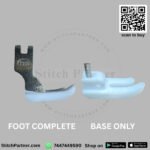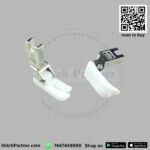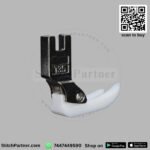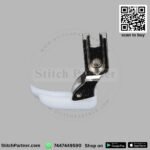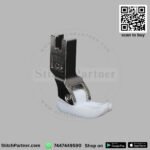
P36 single side presser foot for lock stitch sewing machine
P36 Single Side Presser Foot for Lock Stitch Machine Price range: ₹20.00 through ₹30.00
Back to products
MT18 colour teflon presser foot for industrial sewing machine
MT18 Colour Teflon Presser Foot for Industrial Sewing Machines Price range: ₹10.00 through ₹20.00

T350 White Teflon Presser Foot for Industrial Sewing Machines

Category:

Price range: ₹10.00 through ₹20.00

15 People watching this product now!

Fast Shipping

Carrier information

COD Availabe

Payment methods

Call Support

Unlimited help desk

Whatsapp

Can't fine Parts? Send Your Images Here.

Additional information
TYPEONLY BASE, COMPLETE

Description

Smooth Sewing on Sticky and Difficult Fabrics

The T350 White Teflon Presser Foot is designed for smooth, friction-free stitching on materials that normally drag under standard metal presser feet. If you regularly sew leather, vinyl, laminated fabrics, or coated materials, this presser foot helps improve fabric feeding and stitch consistency.

Its non-stick white Teflon base allows the fabric to glide smoothly without sticking, dragging, or bunching. This improves stitching quality and reduces skipped stitches, puckering, and uneven seams.

Built for high-speed industrial use, this presser foot is suitable for garment factories, leather workshops, tailoring units, and boutique production setups.


Why Choose T350 White Teflon Presser Foot?

Standard metal presser feet often struggle with sticky or coated fabrics. This creates feeding issues, seam distortion, and poor stitch quality.

The T350 solves this problem by reducing friction between the presser foot and fabric surface.

Key advantages include:

  • Smooth feeding on sticky surfaces
  • Reduced seam puckering
  • Better control on layered fabrics
  • Improved precision stitching
  • Less surface damage on delicate materials

This makes it a practical presser foot attachment for professional garment stitching and specialty fabric work.


Key Features

Ultra-Slick Non-Stick Teflon Base

The white Teflon sole allows fabrics to pass under the foot with minimal resistance. This improves fabric feeding and reduces sticking.

Pucker-Free Stitching

Helps maintain flat and smooth seams, especially when working with difficult layered materials.

Surface Protection

Reduces the risk of scratches, shiny pressure marks, or scuffs on sensitive surfaces.

Spring-Loaded Mechanism

The spring-loaded design helps the foot adapt to changing fabric thickness during sewing.

Heavy-Duty Industrial Build

Made for continuous production use in tailoring units, upholstery work, and garment manufacturing.


Machine Compatibility

This T350 presser foot is compatible with high-shank single-needle industrial lockstitch machines including:

  • Juki DDL-8100
  • Juki DDL-8500
  • Juki DDL-8700
  • Jack F4
  • Jack F5
  • Brother
  • Singer
  • Fucen
  • Gemsy
  • Zoje

Please verify the shape and fitting of your existing presser foot before purchasing.

Machine Compatibility Table

Machine TypeCompatible
Single Needle Industrial Lockstitch MachineYes
TA1 Umbrella Sewing MachineNo

Best Fabric Types

The T350 White Teflon Presser Foot performs best on difficult fabrics that usually stick to metal feet.

Leather

Excellent for smooth movement during leather stitching.

Vinyl

Prevents drag and improves straight stitching.

Synthetic Suede

Helps avoid sticking and surface marks.

Plastics

Improves glide over plastic-coated surfaces.

Rubberized Textiles

Useful for technical fabrics with high friction.

Heavy Polyester Blends

Provides better feeding during thick fabric sewing.


Best Use Cases

This presser foot is ideal for:

  • Leather bag stitching
  • Jacket manufacturing
  • Upholstery work
  • Rainwear production
  • Synthetic fabric sewing
  • Boutique garment production

It is especially useful when sewing fabrics where normal metal feet create excessive drag.


How To Use

  1. Turn off your sewing machine.
  2. Remove the existing presser foot.
  3. Install the T350 White Teflon Presser Foot.
  4. Ensure proper alignment with needle position.
  5. Test on a fabric sample before production use.
  6. Adjust pressure if needed for optimal feeding.