
Blog
Industrial Sewing Machine Presser Foot Types Guide

Quick Answer
Industrial sewing machine presser feet use a high-shank (¾-inch) mount. Domestic machines use a low-shank (½-inch) mount instead, and the two are not interchangeable despite “universal” marketing claims. Beyond the standard foot, the most common industrial types are the buttonhole/work clamp foot, overlock/overedge foot, and piping/cording foot. Choosing the right foot for your machine and fabric prevents uneven feeding, skipped stitches, and needle strikes. Because feet are often mismatched by habit rather than by design, it’s worth checking your shank type before ordering a replacement.
Why Presser Foot Choice Matters
The presser foot holds fabric flat and steady against the feed dog as the needle stitches. The wrong foot for the job doesn’t just produce a worse finish. It can cause fabric puckering, uneven feeding on multiple layers, or the needle striking the foot itself.
Before buying any replacement foot, confirm your machine’s shank type. Industrial machines almost universally use a high shank; domestic machines use a low shank. A foot built for one will not correctly fit the other, regardless of how it’s marketed.
Common Industrial Sewing Machine Presser Foot Types
| Foot Type | Used For | Common Machines |
|---|---|---|
| Standard/Straight foot | General straight-stitch garment work | Single-needle lockstitch (Juki, JACK, Brother) |
| Buttonhole/Work clamp foot | Holding fabric steady during buttonhole cycles | Juki LBH series, JACK buttonhole machines |
| Overlock/Overedge foot | Edge finishing, knitwear and sportswear seams | Jack, Pegasus, Siruba overlockers |
| Piping/Cording foot | Binding, raw-edge piping, corded piping | Universal single-needle machines (Juki, Brother, Jack, Singer) |
| Walking/Compound-feed foot | Multiple thick layers, upholstery, canvas | Walking-foot and compound-feed machines only |
| Teflon/Non-stick foot | Vinyl, leather, laminated or sticky fabrics | Any high-shank machine, swapped in as needed |
Matching Presser Feet to Your Machine Brand
Presser feet are generally matched by mounting pattern and machine model, not brand exclusivity. A well-made foot for a JACK E4 overlocker, for example, will often also fit compatible Pegasus and Siruba models with the same mounting geometry. Always check the listed compatible models before ordering, since minor mounting differences between machine generations can prevent a proper fit.
Signs You Need to Replace a Presser Foot
- Visible wear, chipping, or a bent sole plate that no longer sits flat against the feed dog
- Inconsistent stitch length or fabric slipping under the foot during stitching
- Rust or corrosion on the contact surface, which can snag or mark fabric
- A loose or worn mounting screw hole that no longer holds the foot securely
The most common mistake we see isn’t a wrong foot exactly — it’s someone reusing an old, slightly bent foot because it “still fits.” A warped sole plate keeps fabric from feeding evenly no matter how well you thread and tension the machine, and it’s often the last thing people check.
Shop Genuine Presser Feet
We stock a wide range of industrial presser feet across major brands:
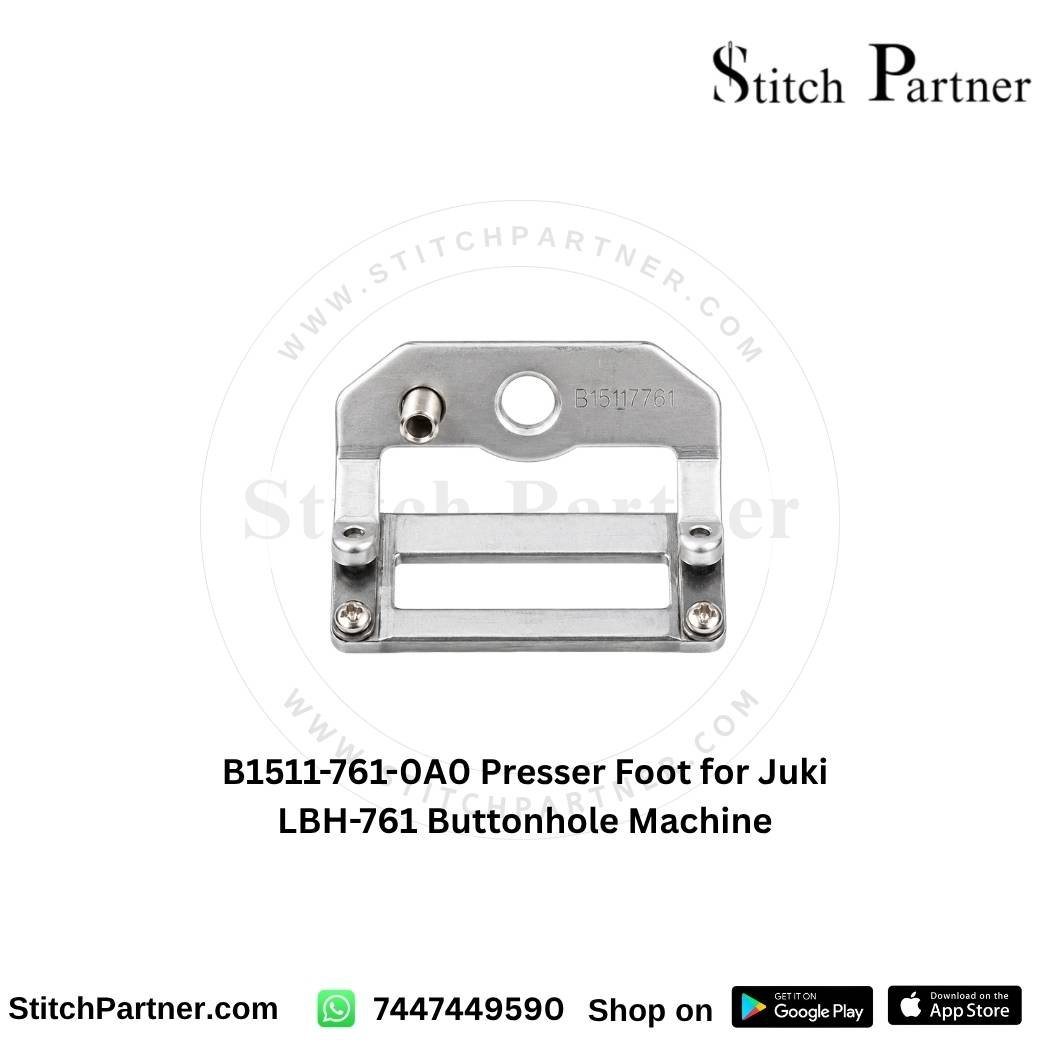
- B1511-761-0A0 Work Clamp Presser Foot for Juki LBH-761/762 buttonhole machines
- B1511-773-0A0 Buttonhole Presser Foot for Juki & Jack
- 277112 4-Thread Overlock Presser Foot for Jack & Pegasus
- 4-in-1 Piping Folder & Cording Binder for Juki, Brother, Jack & more
- Browse the full Presser Foot for Sewing Machine range


Frequently Asked Questions
Can I use a domestic presser foot on an industrial machine?
No. Industrial machines use a high shank mount, while domestic machines use a low shank mount. The two are not physically interchangeable regardless of marketing claims.
What’s the difference between an overlock foot and a standard foot?
An overlock/overedge foot has a built-in tape guide and finger designed for edge finishing on overlockers, helping fabric feed evenly and reducing puckering on knits — a standard foot lacks this guide.
Do presser feet work across different machine brands?
Often yes, when the mounting pattern matches — many feet designed for JACK overlockers also fit compatible Pegasus and Siruba models. Always confirm compatible models before ordering.
How do I know if my presser foot needs replacing?
Visible wear or chipping, fabric slipping during stitching, rust on the contact surface, or a worn mounting screw hole are all signs it’s time to replace the foot.
Related guides: JACK vs Juki Buying Guide | Needle System Guide | Maintenance Checklist
Written by Aashu, owner of Stitch Partner. We’ve spent years sourcing genuine industrial presser feet for factories and tailors across India — this guide reflects what actually comes through our shop, not just spec sheets.


