
Blog
Industrial Sewing Machine Maintenance Checklist

Quick Answer
Most industrial sewing machine breakdowns aren’t sudden. They’re the result of skipped maintenance that quietly builds up. A simple daily, weekly, and monthly checklist catches worn needles, lint buildup, and low lubrication before they cause a stitch-quality problem or a full stoppage. None of these tasks take more than a few minutes; skipping them is what turns a two-minute fix into a half-day repair. Because the cost difference is so large, a short routine is worth building into every shift.
Daily Checks (2–3 minutes)
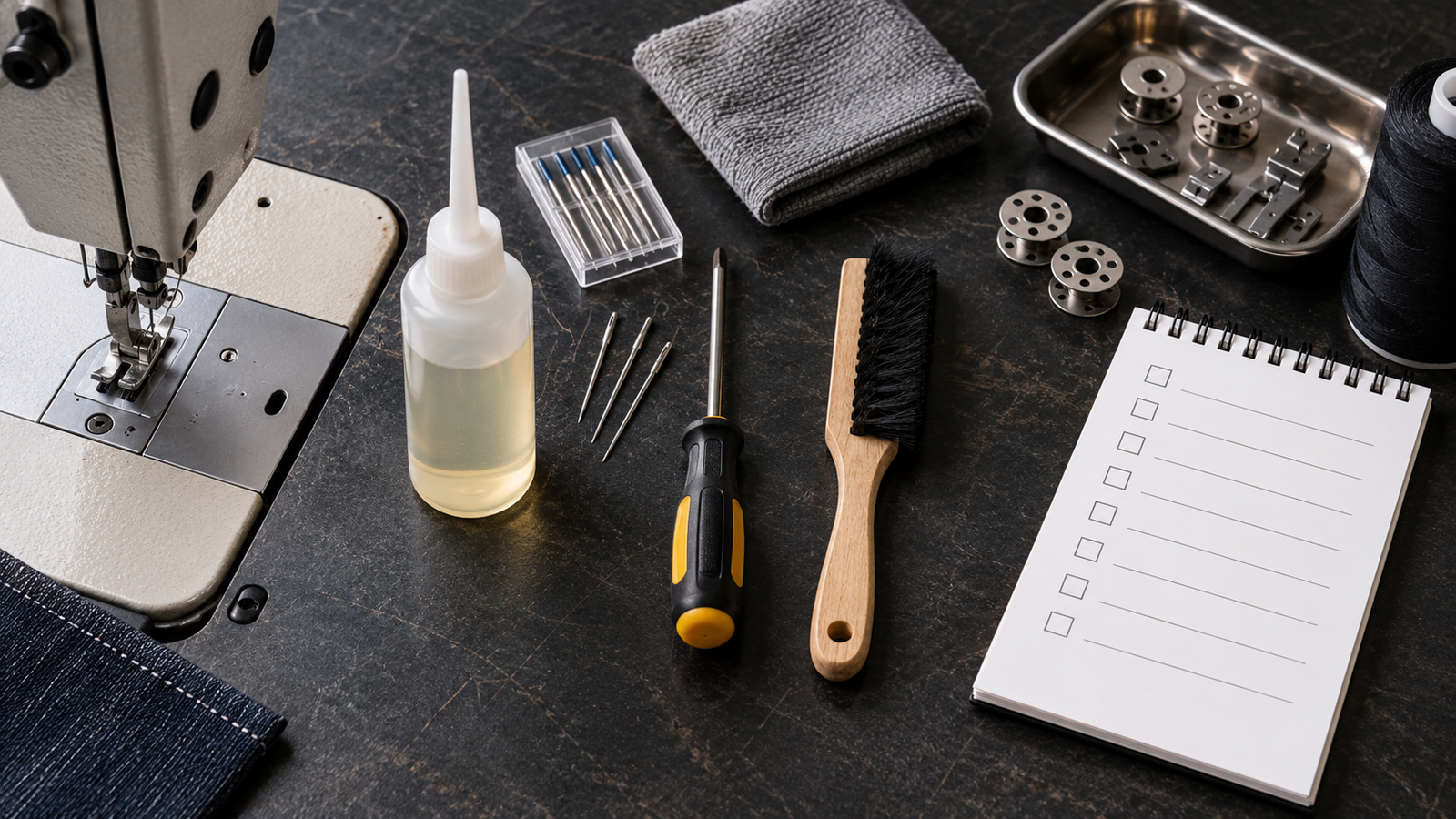
- Clean lint from the bobbin area: lift the machine and remove thread clippings and lint before they compact into the hook mechanism.
- Check the needle: look for a bent tip or dulled point — a damaged needle is the single most common cause of skipped stitches and thread breakage.
- Wipe the bed and tension discs: a quick wipe prevents dust from working into the tension mechanism over a full shift.
Weekly Checks
- Oil moving parts per the manufacturer’s schedule — the hook race, needle bar, and presser bar are the areas that dry out fastest under continuous use.
- Inspect the presser foot for a warped sole plate or worn mounting screw hole; a bent foot causes uneven feeding no matter how well the machine is threaded.
- Run the pull test on upper and bobbin tension to catch a slipping tension disc before it causes a stitch-quality complaint.
Monthly Checks
- Check belt tension on clutch and servo motors — a belt that’s too loose slips under load, and one that’s too tight strains the motor bearing.
- Inspect the bobbin case for wear or a weakened tension spring; drop-test it (see our tension guide below) rather than waiting for a stitch problem to show up.
- Clean the motor housing and control box of dust, especially on servo motors where airflow blockage is a common cause of PCB overheating.
- Check the hand wheel and drive components for play or looseness that wasn’t there last month.
Industrial Sewing Machine Maintenance Schedule at a Glance
| Task | Daily | Weekly | Monthly |
|---|---|---|---|
| Clean lint from bobbin area | ✓ | ||
| Check needle condition | ✓ | ||
| Oil moving parts | ✓ | ||
| Inspect presser foot | ✓ | ||
| Run pull test on tension | ✓ | ||
| Check belt tension | ✓ | ||
| Inspect bobbin case | ✓ | ||
| Clean motor/control box | ✓ |
Why This Actually Saves Money
Nearly every “sudden” breakdown we see at the shop had warning signs for weeks. Think a slightly bent needle nobody swapped, a bobbin case that was starting to lose tension, a belt that was audibly starting to slip. None of these are expensive fixes on their own. Left alone, they turn into hook timing damage or a burnt motor, which are.
Genuine Parts for Routine Maintenance
Keep these on hand so maintenance doesn’t stall waiting for a part to arrive: DBx1 Needles, Lock-Stitch Bobbin Case, and genuine Presser Feet.

Frequently Asked Questions
How often should an industrial sewing machine be oiled?
Weekly for machines in daily use, following the manufacturer’s specified oil points — the hook race and needle bar dry out fastest under continuous operation.
What’s the single most important daily maintenance task?
Clearing lint from the bobbin area. It’s the fastest-building source of thread jams and feed problems, and takes under a minute to clear.
How do I know if my machine needs maintenance versus a repair?
If problems appear gradually (slightly worse stitch quality, a faint new noise), it’s usually still in maintenance territory. Sudden total failure usually means a part has already gone.
Can skipping maintenance really cause expensive damage?
Yes — a loose belt left unchecked can strain a motor bearing, and lint buildup left unchecked can affect hook timing. Small, cheap fixes prevent expensive ones.
Related guides: Tension Problems: The Pull Test | Needle System Guide
Written by Aashu, owner of Stitch Partner. We’ve spent years keeping JACK, Juki, and Brother machines running for factories and tailors across India — this checklist reflects what actually prevents the breakdowns we see most.

